




The Evolution of AR & VR Technologies: Current Trends and Future Prospects in App Development
Published: February 01, 2024 | Updated: September 03, 2024
Introduction
Augmented Reality (AR) and Virtual Reality (VR) have emerged as transformative technologies in the realm of app development. VR immerses users in an interactive, computer-generated world, while AR enhances the physical world by superimposing digital information. These innovations are not only changing the way consumers engage with digital content, but they are also giving companies new avenues to develop creative and captivating applications.
In app development, AR and VR have evolved simultaneously and in tandem. These two fields continue to inspire and influence one another as technology develops, creating ground-breaking applications. From being experimental, AR and VR technologies have developed into essential elements in the creation of cutting-edge applications.
In an increasingly digital and immersive world, understanding the importance of AR and VR technologies and the strategic integration of AR and VR into app development gives organizations a competitive edge while also improving user engagement.
In this article we explore the evolution, current trends, and future prospects of Augmented Reality (AR) and Virtual Reality (VR), with a special focus on mid-market and enterprise companies.
Historical Overview of AR and VR in App Development
Early AR and VR App Development
In the nascent stages of AR and VR app development, pioneering efforts laid the foundation for the transformative technologies we witness today. Early AR applications were marked by experimental projects that sought to overlay digital information onto the physical world.
Notable examples include early AR gaming experiences and location-based applications that introduced users to the concept of augmented reality. Similarly, the emergence of VR app development was characterized by immersive experiences primarily targeting gaming and entertainment.
“As per the recent findings, 73% of consumers are prepared to pay extra for a product that offers complete transparency, which augmented reality can accomplish by captivating the audience and providing an exceptional platform to learn about every aspect of the product.”
Technological Advancements Making AR & VR Accessible
A significant turning point in the evolution of AR and VR in app development occurred with the advancement of technologies that made these experiences more accessible. The integration of AR capabilities into smartphones and tablets through platforms like ARKit (iOS) and ARCore (Android) democratized augmented reality, allowing users to engage with AR applications without the need for specialized hardware. This shift opened new avenues for app developers, enabling them to create AR experiences that reached a broader audience.
Technological strides in VR headset development also played a crucial role in expanding the scope of VR app development. The introduction of more affordable and user-friendly VR headsets, such as those from Oculus and other manufacturers, made virtual reality experiences accessible to a wider user base.
Initial Adoption in Mid-market and Enterprise App Development
As AR and VR technologies became more accessible, mid-market and enterprise companies recognized their potential for enhancing various facets of app development. Early adopters in these sectors leveraged AR to improve product visualization, allowing customers to interact with virtual prototypes before making purchase decisions.
VR found initial adoption in enterprise training programs, providing immersive simulations for employees in sectors such as healthcare, manufacturing, and aviation.
These technologies began to address industry-specific challenges, driving the development of tailored solutions that leveraged AR and VR for more practical and impactful applications.
Current State of AR and VR Technologies in App Development
Key Features and Capabilities Enhancing App Experiences
The current state of AR and VR technologies in app development is marked by a plethora of innovative features and capabilities that significantly enhance user experiences.
Augmented Reality, with features like real-time object tracking, spatial mapping, and markerless recognition, enables businesses to seamlessly integrate digital elements into the user's physical environment. This enhances interactivity, providing users with engaging and context-aware experiences.
In VR app development, key features such as 3D spatial audio, hand tracking, and realistic simulations contribute to creating immersive environments. These features allow users to interact with virtual spaces and objects, fostering a sense of presence and depth within the app.
"Xerago's AR solutions redefine customer experiences, seamlessly blending interactive product demonstrations and captivating marketing campaigns to elevate brands to new heights."
Product Visualization Trends in AR App Development
One prominent trend in AR app development is the utilization of product visualization to revolutionize how consumers interact with goods and services.
AR enables users to virtually place and manipulate products in their real-world environment before making purchase decisions. This trend is particularly prevalent in industries like retail, furniture, and automotive, where customers can visualize how products fit into their homes or test drive virtual vehicles.
AR-powered try-before-you-buy experiences have become a standard in many e-commerce applications, providing a unique and personalized shopping experience. This trend not only improves customer satisfaction but also reduces the likelihood of returns, creating a more efficient and sustainable retail ecosystem.
Immersive Experiences and Simulations in VR App Development
In the realm of VR app development, the focus is on delivering immersive experiences and realistic simulations that transcend traditional boundaries. Industries such as healthcare, education, and training leverage VR to create simulations that allow users to practice procedures, learn in realistic environments, and engage in hands-on training. This is particularly valuable for scenarios where real-world training might be impractical or expensive.
Social VR applications further contribute to immersive experiences by allowing users to interact with others in shared virtual spaces, creating a sense of community and connection.
DO YOU KNOW?
“Consumer spending on AR/VR is expected to reach $72 billion by 2024”
Technological Advancements Shaping AR and VR App Development

ARKit and ARCore: Augmented Reality Platforms for App Developers
ARKit and ARCore are augmented reality (AR) development platforms created by Apple and Google, respectively, to enable developers to build AR experiences for iOS and Android devices.
- Facilitate AR app development on respective platforms and provide essential tools for motion tracking, environmental understanding, and light estimation
- Enable developers to create immersive AR experiences compatible with a wide range of mobile devices
- Support for markerless recognition and horizontal plane detection for accurate spatial mapping
VR Headsets: Cutting-edge Hardware Developments for VR Apps
Advanced VR Headsets:
- Improved Display Technology: Higher resolutions and refresh rates for sharper and smoother visuals
- Enhanced Tracking Systems: Precise motion tracking and reduced latency for a more immersive experience
- Integrated Sensors: Accelerometers, gyroscopes, and proximity sensors for seamless interaction
- Ergonomic Designs: Comfortable and lightweight headsets for prolonged usage
Wireless and Standalone VR:
- Standalone VR devices eliminating the need for external sensors or tethered connections
- Wireless VR Headsets eliminates the restrictions imposed by cables, providing users with a more dynamic and immersive interaction.
- Increased affordability and accessibility, expanding the user base
Haptic Technology: Enhancing Tactile Experiences in App Development
Haptic Feedback Systems:
- Integration of haptic feedback in AR and VR applications provide users with realistic tactile sensations.
- Implementation of precise vibration patterns pave way for simulating touch, texture, and resistance
- It enhances realism in simulations, gaming, and training scenarios
- Improves user engagement and immersion by incorporating the sense of touch
5G and Edge Computing: Enabling Seamless AR and VR App Experiences
5G Connectivity:
- Enables ultra-fast and low-latency data transmission for real-time AR and VR interactions
- Enables high-quality streaming of AR content and VR experiences
- Facilitates collaborative AR applications and multiplayer VR gaming
- Enhances responsiveness and reduces latency for a smoother user experience
Edge Computing:
- Offloading processing tasks to edge servers for faster data retrieval
- Reduces latency in AR and VR applications, improving real-time responsiveness
- Enables complex computations to be performed closer to the user's device
- Enhances the overall performance and reliability of AR and VR experiences
These technological advancements collectively propel AR and VR app development into new frontiers, providing developers with powerful tools and capabilities to create more immersive, realistic, and responsive applications. As AR and VR continue to evolve, these innovations contribute to a richer user experience and open up new possibilities for creative and impactful app development.
Challenges in AR and VR App Development
Technical Challenges in Integrating AR and VR into Apps:

- Hardware Compatibility: Ensuring seamless integration across a diverse range of devices with varying hardware specifications.
- Precise Calibration: Overcoming challenges in precise calibration, especially in markerless AR environments, for accurate object recognition and tracking.
- Real-time Rendering: Addressing computational demands for real-time rendering of high-quality graphics in VR applications to maintain optimal performance.
Cost Implications and ROI Considerations for App Developers:
- Development Costs: Managing high development costs associated with acquiring specialized skills, tools, and technologies for AR and VR app development.
- Hardware Expenses: Addressing potential user barriers due to the cost of VR headsets or AR-compatible devices.
- ROI Uncertainty: Navigating the challenge of predicting and measuring Return on Investment (ROI), especially for enterprises new to AR and VR adoption.
Addressing User Experience Concerns in AR and VR Apps:
- User Interface Design: Navigating challenges in designing intuitive user interfaces for AR and VR, considering spatial interaction, navigation, and menu placement.
- Reducing Latency: Minimizing latency to enhance user comfort and prevent motion sickness, particularly crucial in VR applications.
- Accessibility: Ensuring accessibility for users with disabilities, requiring thoughtful design adjustments for immersive experiences.
Navigating these challenges is crucial for the successful development and adoption of AR and VR applications. Developers and businesses must approach these obstacles strategically to create user-friendly, economically viable, and compelling AR and VR experiences.
Opportunities for App Development in Enterprises
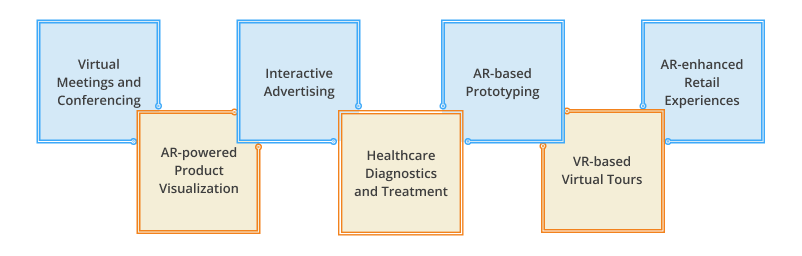
- AR-guided Workflows: Implementing AR applications to guide employees through complex workflows, reducing errors and improving overall efficiency.
- AR-powered Product Visualization: Offering customers the ability to visualize products in their real-world environment before purchase, enhancing the online shopping experience.
- Interactive Advertising: Utilizing AR to create interactive and engaging advertising campaigns, leading to higher customer engagement and brand recall.
- Healthcare Diagnostics and Treatment: Developing AR applications for medical professionals to visualize and plan surgeries, and VR solutions for patient therapy and mental health treatments.
- Virtual Meetings and Conferencing: Creating VR meeting spaces for remote teams to collaborate in a shared virtual environment.
- VR Design Reviews: Facilitating collaborative design reviews in VR environments, allowing teams to assess and refine product designs.
- AR-enhanced Retail Experiences: Integrating AR into retail apps to offer customers interactive and personalized in-store experiences.
- VR-based Virtual Tours: Providing virtual tours of real estate properties or travel destinations through VR applications, enhancing pre-purchase experiences.
Conclusion
The exploration of the historical evolution, current trends, and future prospects of augmented reality (AR) and virtual reality (VR) underscores a dual revolution that has reshaped the landscape. Apparently, AR and VR technologies, each contributing their own unique capabilities, have become integral components of app development, offering novel avenues for creativity and engagement for enterprises.
By integrating these technologies strategically, companies position themselves to stay ahead of the curve, offering innovative solutions that cater to the evolving expectations of their user base.
As we look ahead, the future of AR and VR in enterprise app development appears promising. The potential combination of these technologies with the advancements in AI suggests a continued trajectory of growth and innovation. Embracing this evolution is indispensable for attracting younger generations and delivering compelling and user-centric digital experiences.



Global Office Locations

2570 N. First Street, Suite 200,
San Jose, CA 95131

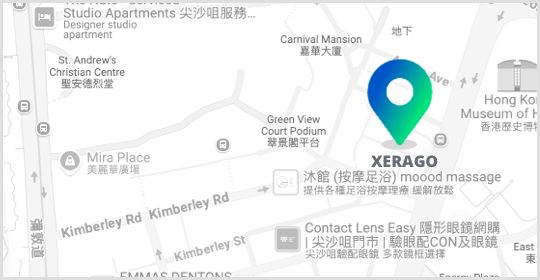
Office No. 26, 10/F, Beverley Commercial Centre,
87-105 Chatham Road South, Tsim Sha Tsui, Kowloon,
Hong Kong
The Octagon Building, #11-07, 105, Cecil Street,
Singapore 069 534

#901, 9th Floor , Ellora Fiesta.
Plot No - 8 , Sector - 11 , Sanpada.
Opp. Juinagar Rly Station.
Navi Mumbai – 400 705

Xerago Towers, Plot 80 & 93,
Industrial Estate, Perungudi,
Chennai, Tamil Nadu - 600096


(Coming Soon)
2570 N. First Street, Suite 200,
San Jose, CA 95131
Office No. 26, 10/F, Beverley Commercial Centre,
87-105 Chatham Road South,
Tsim Sha Tsui, Kowloon,
Hong Kong
The Octagon Building, #11-07, 105, Cecil Street,
Singapore 069 534
#901, 9th Floor , Ellora Fiesta.
Plot No - 8 , Sector - 11 , Sanpada.
Opp. Juinagar Rly Station.
Navi Mumbai – 400 705
Xerago Towers, Plot 80 & 93,
Industrial Estate, Perungudi,
Chennai, Tamil Nadu - 600096
(Coming Soon)