




Emerging Technologies in Mobile App Development: AR, VR, and Beyond
Published: February 01, 2024 | Updated: July 09, 2025
Introduction
When it comes to the ever-evolving realm of mobile app development, the integration of emerging technologies has become a pivotal force, reshaping the landscape and redefining user experiences. As we navigate the dynamic intersection of innovation and connectivity, several cutting-edge technologies have emerged as catalysts for change.
Augmented Reality (AR), Virtual Reality (VR), Artificial Intelligence (AI) and Machine Learning (ML), 5G, Blockchain technology, Internet of Things (IoT) and Progressive Web Apps (PWAs) are game changers in this arena.
As these technologies converge, the mobile app landscape stands at the forefront of a customer-centric evolution, where innovation meets enhanced functionality, promising a future where mobile experiences are not just functional but extraordinary.
Augmented Reality (AR)
Augmented Reality (AR) is a technology that overlays digital information onto the real world, enriching the user's reality with computer-generated sensory input such as sound, video, graphics, or GPS data. Fueled by sophisticated algorithms, AR seamlessly integrates virtual objects into the real-world environment in real-time, offering an immersive and interactive experience for users.
AR elevates user experiences by creating interactive and enjoyable engagements, fostering a comprehensive understanding of products or services and leading to increased customer satisfaction and loyalty.
AR significantly boosts customer engagement by providing interactive experiences, such as virtual try-ons in retail apps or virtual tours in travel apps, resulting in enhanced user satisfaction and increased sales.
AR serves as an effective tool for immersive learning experiences, enabling applications in medical training and education. Medical apps, for example, can offer virtual training scenarios for students to enhance their understanding through simulations.
AR enhances marketing experiences, capturing potential customers' attention with innovative advertisements. E-commerce apps benefit from AR by providing virtual try-ons and product visualizations, ultimately driving increased sales.
Virtual Reality (VR)
Virtual Reality (VR) in mobile apps has become a transformative force, revolutionizing user experiences and engagement across various industries. With VR, mobile apps can deliver immersive and interactive content, elevating user engagement to unprecedented levels.
VR offers users a more immersive and realistic gaming environment, allowing them to interact with the virtual world in ways that were previously unimaginable.
VR enables users to explore and experience different locations in a more immersive way, helping them make informed decisions about their travel plans.
Customers can virtually try on clothes, visualize furniture in their homes, or explore products in a three-dimensional space before making purchase decisions.
Users can watch immersive 360-degree videos, experience virtual concerts, or engage with interactive storytelling in a way that goes beyond traditional media consumption.
Mobile apps with VR features, creates a new dimension of social interaction, where users can share experiences and activities in a virtual environment.
Artificial Intelligence (AI)
AI technologies empower mobile applications to understand user preferences, automate tasks, and adapt to changing contexts.
AI algorithms analyze user behavior, preferences, and historical data to deliver personalized content and recommendations, enhancing user engagement and satisfaction, whether in content consumption, e-commerce recommendations, or social media interactions.
AI-driven chatbots and virtual assistants provide real-time interaction and support, as they can understand natural language and can assist users with queries, perform tasks, and provide information.
Users can search, identify objects, or interact with apps using voice commands or image inputs in applications like virtual assistants, social media filters, and language translation apps.
AI algorithms analyze data from wearables and sensors. They provide personalized insights, track progress, and offer recommendations for users to improve their health and wellness.
Natural Language Processing (NLP) is employed in messaging apps, language translation services, and voice-controlled interfaces, making communication more intuitive and user-friendly.
5G
5G networks provide significantly faster data transfer speeds compared to previous generations. This increased speed, coupled with low latency, results in almost real-time communication between devices and servers. Mobile apps can deliver seamless and instantaneous experiences, benefiting applications like video streaming, online gaming, and augmented reality (AR).
With higher bandwidth and lower latency, 5G enhances the quality of video streaming on mobile apps. Users can enjoy high-definition and even 4K video content without buffering delays. This is particularly impactful for video streaming services, live broadcasts, and video conferencing applications.
5G's low latency and high bandwidth are a boon for AR and VR applications. These technologies rely heavily on real-time data transfer and quick responsiveness, making 5G essential for delivering immersive and interactive experiences. This is relevant in gaming, education, healthcare, and various enterprise applications.
Applications can offload certain processing tasks to the cloud, leveraging high-speed 5G connections for quick data exchange between the device and cloud servers. This is beneficial for resource-intensive applications and services.
5G's improved accuracy and responsiveness in location tracking enhance location-based services in mobile apps. This is valuable for navigation, geotagging, and location-aware marketing applications.
Internet of Things (IoT)
The integration of the Internet of Things (IoT) with mobile apps has resulted in a paradigm shift, creating a connected ecosystem where devices communicate and share data seamlessly. This synergy between IoT and mobile applications has led to innovative solutions across various industries.
Smart Home Control: Mobile apps paired with IoT devices allow users to remotely control and monitor various aspects of their smart homes. Users can adjust thermostats, control lighting, and even manage home security systems from their mobile devices.
Wearable Devices: Mobile apps often complement wearable IoT devices, such as fitness trackers and smartwatches. These apps collect, analyze, and present data generated by wearables, offering users insights into their health, fitness, and daily activities.
Asset Tracking and Management: Mobile apps integrated with IoT facilitate asset tracking in various industries, including logistics and manufacturing. Sensors on assets provide real-time location data, and mobile apps display this information, aiding in efficient inventory management and supply chain optimization.
Connected Cars: Mobile apps integrated with IoT technology enhance the connected car experience. Drivers can remotely control car functions, receive diagnostics, and access navigation and safety features through their mobile devices.
Retail and Inventory Management: IoT devices in retail environments, such as RFID tags and beacons, are integrated with mobile apps and facilitate efficient inventory management and enables contactless payments.
Smart Cities: Mobile apps play a crucial role in smart city initiatives by integrating with various IoT sensors and devices like smart streetlights, waste management systems, and public transportation, enhancing urban efficiency and sustainability.
Progressive Web Apps
Progressive Web Apps (PWAs) represent a modern approach to building web applications that deliver an enhanced user experience, combining the best features of web and mobile applications.
PWAs are designed to be responsive, ensuring a seamless and consistent user experience across various devices, including desktops, tablets, and smartphones. They can offline or in low-network conditions. They use service workers to cache essential resources, enabling users to access content even without a reliable internet connection.
PWAs provide an app-like experience within a web browser. They offer features such as smooth animations, gestures, and navigation, resembling the interactions found in native mobile applications. PWAs can send push notifications to users, similar to native mobile applications. This feature allows developers to engage users with timely updates, announcements, or personalized messages.
PWAs are built to be compatible with various web browsers, reducing the dependency on a specific platform or browser. Developing a PWA can be more cost-effective compared to building separate applications for different platforms (iOS, Android). PWAs leverage web technologies, making it possible to reach a broader audience with a single codebase.
Overall, Progressive Web Apps offer a compelling alternative to traditional web and native mobile applications, providing a balance between the reach of the web and the capabilities of native apps. They have gained popularity as a versatile solution for delivering a superior user experience across a variety of devices and network conditions.
Voice Tech
Voice technology has become a transformative force in the realm of mobile apps, introducing a hands-free and natural way for users to interact with their devices.
Voice Commands and Control: Users can initiate actions, search for information, send messages, and perform various tasks using voice commands.
Virtual Assistants: Powered by voice recognition and natural language processing technologies, these assistants, such as Siri, Google Assistant, and Alexa, provide users with information, perform tasks, etc. through voice interactions.
Voice Search: Users can speak their queries, and the app leverages voice recognition to retrieve relevant information, products, or services.
Voice Biometrics for Authentication: Voice recognition algorithms verify the user's identity by analyzing their unique vocal characteristics, providing a convenient and secure authentication method.
Interactive Voice Response (IVR) Systems: Mobile apps in customer service and support sectors, implement IVR systems with voice technology. Users can engage in conversations with automated systems to obtain information, make reservations, or resolve queries.
Voice Notes and Dictation: Voice-to-text functionalities allow users to create notes, compose messages, or input text by speaking. This feature is particularly useful in messaging apps, productivity tools, and note-taking applications.
In-Car Voice Integration: Mobile apps integrated with in-car systems leverage voice technology for hands-free control. Users can make calls, play music, get directions, and perform other actions without taking their hands off the wheel.
Leveraging Emerging Technology for a First-mover Advantage
The integration of emerging technologies into mobile apps represents a strategic imperative for brands seeking a competitive edge. Whether it's Augmented Reality (AR), Virtual Reality (VR), Artificial Intelligence (AI), 5G connectivity, Internet of Things (IoT), Progressive Web Apps (PWAs), or Voice Technology, each of these innovations holds the potential to revolutionize user experiences and propel brands ahead of the curve.
- Brands can deliver unparalleled and innovative user experiences. Whether it's immersing users in augmented worlds, providing AI-driven personalization, or enabling seamless interactions through voice commands, these technologies elevate the mobile app experience, capturing user attention and fostering loyalty.
- Brands can leverage emerging technologies to enhance the functionality and utility of their mobile apps. From real-time data processing enabled by 5G to the predictive insights offered by AI, integrating these technologies enables brands to offer services and features that surpass traditional app capabilities.
- Brands that embrace emerging technologies stand out from the competition. Tapping into emerging technologies enables brands to strategically position themselves as industry leaders and innovators. This positioning not only attracts a tech-savvy user base but also creates a narrative of forward-thinking and adaptability, fostering trust and brand affinity.
- Consumer expectations evolve alongside technological advancements. Brands that proactively integrate emerging tech into their mobile apps demonstrate a commitment to staying ahead of the curve and addressing the ever-changing needs and preferences of their users.
Tapping into emerging technologies is not merely a strategic choice but a necessity for brands aiming to thrive in the mobile app landscape. The first-mover advantage gained by embracing these innovations goes beyond short-term gains; it establishes a brand's position as a leader in the eyes of consumers, setting the stage for sustained success and relevance in a rapidly evolving digital world.
Conclusion
As technology continues to evolve, the potential for groundbreaking applications and services will only expand. Those who pioneer this frontier, embracing the synergies between AR, VR, AI, 5G, IoT, PWAs, and voice tech, stand poised to redefine industries, captivate audiences, and shape the future of digital experiences. In this dynamic landscape, the first movers have the unique opportunity not only to lead but also to inspire the next wave of technological advancements, setting the stage for a transformative and interconnected digital future.



Global Office Locations

2570 N. First Street, Suite 200,
San Jose, CA 95131

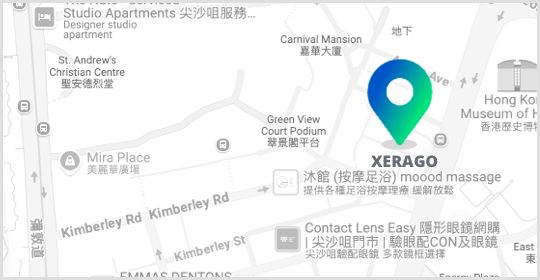
Office No. 26, 10/F, Beverley Commercial Centre,
87-105 Chatham Road South, Tsim Sha Tsui, Kowloon,
Hong Kong
The Octagon Building, #11-07, 105, Cecil Street,
Singapore 069 534

#901, 9th Floor , Ellora Fiesta.
Plot No - 8 , Sector - 11 , Sanpada.
Opp. Juinagar Rly Station.
Navi Mumbai – 400 705

Xerago Towers, Plot 80 & 93,
Industrial Estate, Perungudi,
Chennai, Tamil Nadu - 600096





(Coming Soon)
2570 N. First Street, Suite 200,
San Jose, CA 95131
Office No. 26, 10/F, Beverley Commercial Centre,
87-105 Chatham Road South,
Tsim Sha Tsui, Kowloon,
Hong Kong
The Octagon Building, #11-07, 105, Cecil Street,
Singapore 069 534
#901, 9th Floor , Ellora Fiesta.
Plot No - 8 , Sector - 11 , Sanpada.
Opp. Juinagar Rly Station.
Navi Mumbai – 400 705
Xerago Towers, Plot 80 & 93,
Industrial Estate, Perungudi,
Chennai, Tamil Nadu - 600096
(Coming Soon)