




User Analytics and Insights in Branded Metaverse Spaces: Data-Driven Strategies
Published: February 01, 2024 | Updated: September 30, 2024
Introduction
While the concept of the Metaverse has gained significant attention, the analytics surrounding this digital realm are still in their early stages of development. The complexities of the Metaverse, coupled with the diversity of user interactions, present unique challenges for analytics. Traditional metrics are being redefined, and new methodologies are emerging to capture the intricacies of user behavior, preferences, and engagement. Companies are exploring innovative technologies and strategies to unlock the full potential of Metaverse Analytics.
In this era of digital transformation, the potential for data-driven strategies in the Metaverse is immense. Whether it's enhancing user engagement in virtual spaces, personalizing experiences through advanced analytics, or redefining marketing and business strategies, the Metaverse offers a vast playground for innovation.
With a focus on mid-market and enterprise companies, the article aims to guide businesses in crafting effective data-driven strategies within the Metaverse, navigating the complexities and leveraging the transformative potential of this landscape.
Can analytics be leveraged in metaverse to empower data-driven strategies?
Absolutely!
As the metaverse evolves, it becomes a rich source of user interaction data, offering insights that can be harnessed for strategic decision-making. Here's how:
"Mastering the metaverse is not a journey of chance but of calculated precision. Data-driven strategies form the foundation, transforming ambiguity into actionable insights and virtual interactions into strategic excellence."
- Understanding User Behavior: Analytics in the metaverse can track user engagement, interaction patterns, and preferences. This understanding forms the basis for tailoring experiences, optimizing content, and enhancing overall user satisfaction.
- Personalization and Targeting: Metaverse analytics enable the collection of detailed user data, allowing businesses to personalize experiences based on individual preferences. This level of personalization enhances user engagement and fosters stronger connections between users and virtual environments.
- Optimizing Content and Design: Through analytics, businesses can analyze heatmaps, user journeys, and visual interactions within the metaverse. This information aids in optimizing content placement, refining user interfaces, and creating immersive experiences that resonate with the target audience.
- Performance Metrics and ROI: Analytics provide measurable metrics such as conversion rates, time spent in the metaverse, and user interactions. These metrics allow businesses to assess the performance of virtual experiences, measure the return on investment (ROI), and refine strategies for better outcomes.
- Strategic Decision-Making: Data-driven insights from metaverse analytics inform strategic decision-making. Businesses can identify trends, evaluate the success of marketing campaigns, and adapt their strategies based on real-time feedback from user interactions.
- Security and Trust: Analytics can also play a crucial role in ensuring the security and trustworthiness of metaverse interactions. By monitoring and analyzing data, businesses can identify and address potential security risks, ensuring a safe and reliable virtual environment for users.
- Innovation and Iteration: Continuous analysis of user data allows businesses to stay agile and responsive to evolving trends within the metaverse. It fosters a culture of innovation and iteration, enabling organizations to adapt their strategies based on changing user preferences and technological advancements.
In short, leveraging analytics in the metaverse empowers data-driven strategies by providing valuable insights into user behavior, preferences, and the overall performance of virtual experiences. This information forms the foundation for informed decision-making, strategic planning, and the continuous improvement of metaverse interactions.
Understanding User Analytics in the Metaverse
A. Key Metrics and Indicators
- User Engagement: Measure the depth and frequency of user interactions, gauging brand loyalty and experience quality.
- Time Spent in the Metaverse: Evaluate the stickiness and appeal of virtual experiences, guiding content optimization.
- Interaction Patterns: Analyze movement, gestures, and social interactions for UI/UX improvements and intuitive design.
- Conversion Rates: Assess the success of actions like purchases, event sign-ups, or engagement, indicating the impact of Metaverse experiences on user behavior.
B. Tools and Technologies for Metaverse Analytics
- VR/AR Analytics Platforms: Specialized platforms offer heatmaps, session recordings, and user journey analysis for a deeper understanding of immersive user behavior.
- Data Collection Methods: Companies employ sensors, tracking tools, and user feedback mechanisms to gather actionable insights from virtual spaces.
- Integration with Existing Analytics Systems: The use of specialized tools and technologies is paramount for seamlessly integrating insights with traditional analytics systems. This integration ensures a cohesive analysis, providing organizations with a unified view of user behavior across virtual and traditional platforms. By harmonizing these data streams, businesses gain a comprehensive understanding that underpins informed decision-making and optimization strategies.
C. Emerging Technologies in Metaverse Analytics
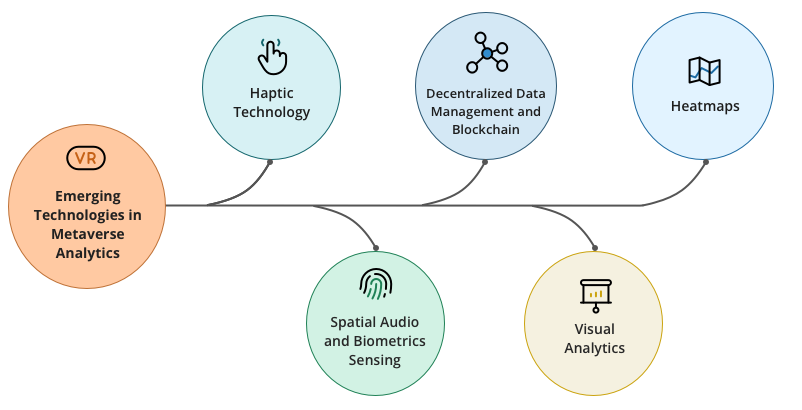
- Haptic Technology and User Interaction: Utilizes touch feedback to enhance user interaction, providing real-time sensations and immersive experiences within the Metaverse.
- Heatmaps for Understanding User Behavior: Visualizes user interaction patterns, offering insights into high-traffic areas and popular activities for optimized virtual space design.
- Visual Analytics for Deeper Insights: Transforms complex data into visually understandable insights, aiding in trend identification, correlations, and informed decision-making.
- Spatial Audio and Biometric Sensing:
- Immersive Soundscapes and User Engagement: Creates 3D auditory environments, enhancing user engagement with realistic sound placement.
- Biometric Data for Personalized Experiences: Utilizes physiological data like heart rate for tailored and personalized user experiences within the Metaverse.
- Decentralized Data Management and Blockchain:
- Ensuring Security and Transparency: Utilizes blockchain for tamper-resistant ledgers, ensuring secure and transparent data management.
- Blockchain in Data Verification and Transactions: Enhances data verification and transactional security, fostering trust and reliability within virtual ecosystems.
- Eye Tracking and Gaze Analysis:
- Understanding User Focus and Attention: Monitors user gaze to understand visual priorities and areas of focus within virtual environments.
- Applications in UI/UX Optimization: Optimizes user interfaces based on eye tracking data, improving overall usability and satisfaction.
- Neurotechnology and Brain-Computer Interfaces (BCIs):
- Brain Signals for Enhanced User Interaction: Captures brain signals to enable direct communication between the brain and virtual environments.
- Potential Applications in Accessibility and Immersion: Holds potential for improving accessibility and immersion, allowing users to interact through neural commands and enhancing inclusivity within the Metaverse.
Data-driven Strategies for Mastering the Metaverse
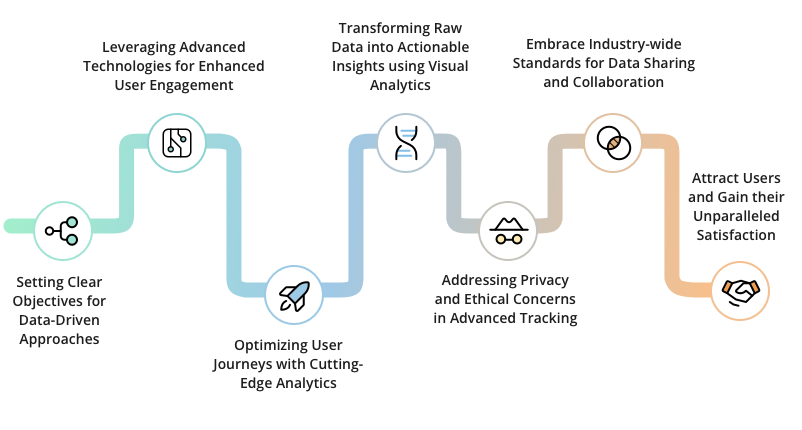
A. Setting Clear Objectives for Data-Driven Approaches
- Defining Business Goals: To make the most of the power of Metaverse analytics, businesses must first establish clear and measurable objectives. This involves defining specific outcomes and milestones aligned with broader business strategies.
- Aligning Analytics with Strategic Objectives: Effective Metaverse analytics goes beyond data collection; it requires alignment with strategic business goals. Ensuring that analytics efforts directly contribute to overarching objectives enables companies to derive meaningful insights and drive impactful decision-making.
B. Leveraging Advanced Technologies for Enhanced User Engagement
Haptic Technology and Personalized Interactions:
- Real-Time Feedback and Immersive Experiences: Leveraging haptic technology provides real-time feedback, enhancing user immersion by allowing them to feel and interact with virtual environments.
- Spatial Audio and Biometric Sensing for Immersive Experiences: Implementing spatial audio creates immersive soundscapes, while biometric sensing tailors experiences based on individual data. These technologies help businesses collectively elevate user engagement, creating personalized and memorable interactions within the Metaverse.
C. Optimizing User Journeys with Cutting-Edge Analytics
Heatmaps for Unveiling User Paths:
- Analyzing Movement and Interaction: Heatmaps offer a visual representation of user paths, enabling businesses to analyze movement and interaction patterns. This insight is instrumental in refining virtual spaces for optimal user experiences.
- Heatmap Applications in Branded Metaverse Spaces: Heatmaps find application in branded Metaverse spaces, guiding decisions on content placement, user flow, and design. Businesses can strategically position elements to enhance engagement and achieve specific branding objectives.
Eye Tracking and Gaze Analysis:
- Understanding User Focus and Attention: Eye tracking technology provides invaluable insights into user focus and attention. Understanding where users direct their gaze informs businesses about visual priorities within the Metaverse, shaping content and design strategies.
- UI/UX Optimization through Eye Tracking: Applying eye tracking data contributes to UI/UX optimization, refining design elements for enhanced usability. Businesses can create more intuitive interfaces, improving overall user satisfaction.
“59% of consumers are eager to move their daily activities into the Metaverse”
D. Visual Analytics: Transforming Raw Data into Actionable Insights
Decentralized Data Management and Blockchain:
- Ensuring Security and Transparency: Decentralized data management powered by blockchain ensures the security and transparency of Metaverse analytics. This is critical for maintaining user trust and safeguarding sensitive information.
- Blockchain in Data Verification and Transactions: Blockchain technology enhances data verification and transactional processes, fostering a trustworthy virtual ecosystem. Smart contracts provide secure agreements, contributing to the reliability of Metaverse analytics.
Enhancing Decision-Making with Visual Analytics:
- Data Visualization Techniques: Visual analytics employs advanced techniques to transform complex data into understandable insights. Businesses can use compelling visualizations to communicate analytics findings effectively.
- Integrating Visual Analytics with Decision-Making Processes: Integrating visual analytics into decision-making processes empowers organizations to make informed choices based on a comprehensive understanding of Metaverse data.
E. Addressing Privacy and Ethical Concerns in Advanced Tracking
- Balancing Personalization with User Privacy: Achieving a delicate balance between personalization and user privacy is crucial. Businesses should implement measures that prioritize user data security while delivering personalized experiences within ethical boundaries.
- Ensuring Informed Consent in Biometric and Neurotechnology: Implementing biometric and neurotechnology requires transparent communication and obtaining informed consent from users. Respecting user privacy is paramount, ensuring a foundation of trust between businesses and their Metaverse audience.
F. The Need for Standardization in Metaverse Analytics
- Overcoming Interoperability Challenges: Standardization is vital for overcoming interoperability challenges within the Metaverse. Businesses should advocate for industry-wide standards to facilitate seamless data sharing and collaboration.
- Industry Collaboration for Standardization: Collaboration within the industry is essential for establishing and maintaining standards in Metaverse analytics. Through shared practices and protocols, businesses can collectively elevate the quality and consistency of analytics efforts, fostering a more robust virtual ecosystem.
To conclude,
In closing, the metaverse is not just a digital landscape; it is a dynamic arena where success hinges on the adept use of data-driven strategies. By leveraging insights from user interactions and embracing advanced technologies like haptic feedback and blockchain, businesses can not only navigate but truly excel in this evolving digital space.
Mastering the metaverse requires a careful balance of technological innovation, user-centric optimizations, and ethical considerations. As architects of this new digital frontier, businesses must commit to standards that ensure a seamless and secure metaverse experience. The journey ahead is not just about exploring; it's about mastering the metaverse, where data-driven strategies serve as the guiding light driving businesses towards a future marked by innovation and unparalleled user satisfaction.



Global Office Locations

2570 N. First Street, Suite 200,
San Jose, CA 95131

Office No. 26, 10/F, Beverley Commercial Centre,
87-105 Chatham Road South, Tsim Sha Tsui, Kowloon,
Hong Kong

The Octagon Building, #11-07, 105, Cecil Street,
Singapore 069 534

#901, 9th Floor , Ellora Fiesta.
Plot No - 8 , Sector - 11 , Sanpada.
Opp. Juinagar Rly Station.
Navi Mumbai – 400 705

Xerago Towers, Plot 80 & 93,
Industrial Estate, Perungudi,
Chennai, Tamil Nadu - 600096





(Coming Soon)
2570 N. First Street, Suite 200,
San Jose, CA 95131
Office No. 26, 10/F, Beverley Commercial Centre,
87-105 Chatham Road South,
Tsim Sha Tsui, Kowloon,
Hong Kong
The Octagon Building, #11-07, 105, Cecil Street,
Singapore 069 534
#901, 9th Floor , Ellora Fiesta.
Plot No - 8 , Sector - 11 , Sanpada.
Opp. Juinagar Rly Station.
Navi Mumbai – 400 705
Xerago Towers, Plot 80 & 93,
Industrial Estate, Perungudi,
Chennai, Tamil Nadu - 600096
(Coming Soon)