




Content Localization and Globalization: Navigating Multilingual Digital Content Production
Published: October 20, 2023 | Updated: September 27, 2024
As the digital marketplace becomes increasingly competitive, expanding to global markets only allows businesses to tap into new customer bases and revenue streams. As "content localization" and "globalisation" pave the way for it and open up a wealth of new opportunities, they have become paramount for businesses looking to thrive in a competitive global marketplace.
“Content Localization is the process of adapting digital content to suit the linguistic, cultural, and regional preferences of a specific target audience.”
“Globalization, on the other hand, is the broader strategy of designing your products, services, and content to be accessible and relevant to audiences worldwide.”
The purpose of this article is to equip you with the knowledge and strategies needed to tap into the vast potential of reaching a global audience.
The Business Case for Content Localization and Globalization
Let’s delve into how these strategies can not only expand your market reach but also enhance the customer experience, and maximize your return on investment.
- Staying Ahead of the Curve: In a world where borders are no longer barriers, businesses that expand globally enjoy a significant competitive advantage. By catering to diverse markets, you can position yourself as a forward-thinking and innovative company.
- Diversification and Risk Mitigation: Expanding into multiple markets can help diversify your revenue streams and reduce dependence on a single market. This diversification can be a vital risk mitigation strategy.
- Cultural Sensitivity: Demonstrating respect for local customs and cultural nuances through your content goes a long way in building trust and rapport with your audience. This sensitivity can foster deep connections with your brand.
- Expanding Revenue Streams: Reaching a global audience can result in significant revenue growth. The more markets you tap into, the greater the potential for sales and revenue.
- Data-Driven Decision-Making: With global reach comes a wealth of data. Analyzing this data can provide insights into customer behavior, preferences, and market trends, allowing you to refine your strategies and maximize ROI.
"Content localization and globalization represent the bridge to connect with diverse global audiences, enabling businesses to transcend borders, broaden their horizons, and maximize their impact on a worldwide stage."
Planning a Multilingual Content Strategy
Effective content localization and globalization begin with a well-thought-out strategy. Here are the key steps to plan and execute a successful multilingual content strategy:

Market Research
- Understanding Local Markets: Before you can effectively localize content, you must get a grasp of the unique characteristics, preferences, and behaviors of the markets you intend to enter. This involves thorough market research to identify cultural norms, market trends, and potential demand.
- Competitor Analysis: Analyze your competitors' strategies in each target market. This can provide valuable insights into market-specific best practices and help you identify gaps in the content landscape that your content can fill.
Language Selection and Prioritization
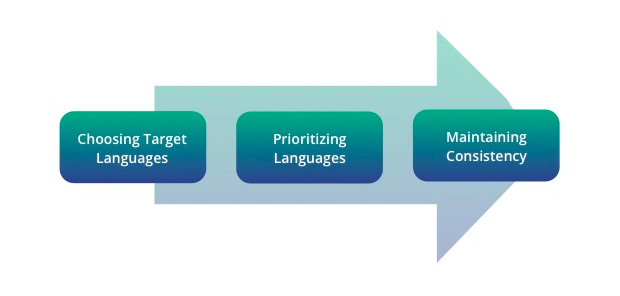
- Choosing Target Languages: Selecting the right languages to target is a strategic decision. Consider factors like market size, growth potential, and alignment with your company's goals. It's often wise to begin with the languages that offer the most significant opportunities.
- Prioritizing Languages: Given resource constraints, prioritize languages based on their importance and relevance to your business. Some languages may be core to your expansion strategy, while others can be considered for later stages.
- Maintaining Consistency: While targeting multiple languages, maintain a consistent brand voice and message. This can be achieved through content style guides and stringent quality control measures.
Resource Allocation and Budgeting
- Resource Allocation: Determine the resources required for your multilingual content strategy. This includes human resources for content creation and translation, as well as technology and tools for streamlining the process.
- Budgeting: Developing a comprehensive budget is essential to ensure you have the necessary financial resources to execute your strategy effectively. Consider the costs associated with translation, content creation, technology investments, and market-specific campaigns.
- Return on Investment (ROI) Projections: Forecast the potential return on investment from entering new markets. This will help justify your budget and provide a basis for performance evaluation.
Content Audit and Adaptation Strategy
- Content Inventory: Start by conducting a content audit to identify all your existing digital content. This inventory will serve as a basis for content adaptation and translation efforts.
- Content Adaptation: Not all content needs a full translation or localization. Develop a strategy to categorize content as per its importance, relevance, and potential impact. Some content may require full adaptation, while others might only need minor adjustments.
- Content Management Systems (CMS): Implement or enhance your content management system to facilitate the seamless management of multilingual content. Ensure it supports content versioning, translation workflows, and the ability to publish content in multiple languages.
While you navigate the complexities of diverse markets and languages, a well-structured strategy only ensures that you will create profound connections with audiences worldwide. With careful planning and decisive execution, your business will be well on its way to embracing the global digital landscape and achieving its prime objectives.
Best Practices for Multilingual Digital Content Production
Creating content that resonates with diverse global audiences is an art. And here we highlight some of the best practices for multilingual digital content production that are essential for companies looking to engage, captivate, and connect with their worldwide customer base.
- Prioritize Transcreation: When dealing with marketing content and brand messaging, opt for transcreation to ensure emotional resonance and cultural relevance.
- Professional Translation: Collaborate with professional translators who not only speak the language but also deeply understand the local culture.
- Visual Adaptation: Ensure visual content, including images and videos, is culturally sensitive and relatable to the target audience.
- User-Generated Content: Encourage user-generated content to add an authentic local touch to your materials and foster community engagement.
- Keyword Localization: Conduct local keyword research to optimize content for how your target audience searches in their language.
- Meta Tags and URLs: Localize meta tags, URLs, and on-page elements to enhance search engine relevance in each market.
- Multilingual SEO Tools: Utilize multilingual SEO plugins and tools to streamline the optimization process for different languages and regions.
- Quality Assurance: Implement robust proofreading and editing processes, involve native speakers in content testing, and use localization testing tools to ensure quality and functionality in all markets.
Implementing these best practices ensures that your multilingual digital content not only speaks the right language but also connects with your global audience on a cultural and emotional level.
Future Trends in Multilingual Content
To prepare your company for the future of multilingual content production, it's crucial to anticipate emerging trends and technological advancements. Here, we explore the trends that are shaping the future of multilingual content.
AI-Driven Localization
- Machine Translation Advancements: AI-driven machine translation systems continue to improve, offering more accurate and context-aware translations. These tools not only speed up the translation process but also enhance the quality of localized content.
- Natural Language Processing (NLP): NLP technologies are enabling more sophisticated content adaptation. They can identify linguistic nuances, cultural references, and emotional tone, allowing for highly accurate transcreation.
- Content Generation: AI-powered tools are becoming capable of generating original content in multiple languages, automating the creation of localized pieces while maintaining brand consistency.
Voice Search and Content Adaptation
- Voice-Activated Devices: The rise of voice-activated devices like smart speakers is changing the way people search for and consume content. This trend requires a shift in content optimization to cater to voice search queries.
- Adaptive Content: Content that dynamically adapts to different devices, including voice-activated ones, is gaining importance. Structured data and content that can be easily parsed by these devices is becoming a priority.
- Localized Voice Content: The need for voice content in local languages is growing. Investing in voiceovers, podcasts, and audio content in multiple languages can be a powerful way to engage global audiences.
Staying informed about and prepared for these future trends in multilingual content is essential for maintaining a competitive edge in the global marketplace. As technology continues to advance and user behaviours change, adapting your content strategy will be a sure-shot way to successfully reach and engage diverse international audiences.
Conclusion
In a world that's more interconnected than ever before, adaptation and evolution are not just options; they're prerequisites for survival and growth. It emphasises the significance of embracing content localization and globalisation for businesses. It's not merely a matter of reaching new markets but about capturing the hearts and minds of those markets. This approach, rooted in cultural sensitivity and adaptability, not only broadens your reach but fosters a sense of belonging to your brand.
So, if you have yet to explore this game, now is the time to seize the moment and connect with the world like never before.



Global Office Locations

2570 N. First Street, Suite 200,
San Jose, CA 95131

Office No. 26, 10/F, Beverley Commercial Centre,
87-105 Chatham Road South, Tsim Sha Tsui, Kowloon,
Hong Kong

The Octagon Building, #11-07, 105, Cecil Street,
Singapore 069 534

#901, 9th Floor , Ellora Fiesta.
Plot No - 8 , Sector - 11 , Sanpada.
Opp. Juinagar Rly Station.
Navi Mumbai – 400 705

Xerago Towers, Plot 80 & 93,
Industrial Estate, Perungudi,
Chennai, Tamil Nadu - 600096





(Coming Soon)
2570 N. First Street, Suite 200,
San Jose, CA 95131
Office No. 26, 10/F, Beverley Commercial Centre,
87-105 Chatham Road South,
Tsim Sha Tsui, Kowloon,
Hong Kong
The Octagon Building, #11-07, 105, Cecil Street,
Singapore 069 534
#901, 9th Floor , Ellora Fiesta.
Plot No - 8 , Sector - 11 , Sanpada.
Opp. Juinagar Rly Station.
Navi Mumbai – 400 705
Xerago Towers, Plot 80 & 93,
Industrial Estate, Perungudi,
Chennai, Tamil Nadu - 600096
(Coming Soon)