




Indisputable Arguments for Going Beyond NAV to Build AMC Brand Affinity
Published: November 06, 2023 | Updated: September 13, 2024
Introduction
Consider this.
A large and efficient private bank offered significantly higher rates of interest to attract new savings account customers. This acquisition strategy sought to showcase the potential for higher returns as the key differentiator in a crowded competitive banking landscape. The bank assumed the desire for higher returns will have customers look beyond brand, security, and service.
The strategy was only moderately successful.
What lessons can Indian Mutual Funds learn from this?
Standing Out
The Indian Mutual Fund (MF) industry, like the banking landscape, is densely populated, intensely competitive and has little product differentiation. Since AMCs hold investor returns to be paramount, MFs marketing collateral showcases their multi-year financial performance as the prime differentiator. And assume this will be the most important decision point for investors.
MF are responsible for the situation where investors do not look beyond NAV growth in choosing a fund.
NAV performance is but one factor
There is no denying that fund NAV performance is a significant determiner of investment choice. But is it the only one?
While NAV performance undoubtedly plays a crucial role in investment decisions, it is imperative to recognize that it is just one of many arbiters in fund selection. NAV performance is a dynamic and multifaceted metric. Factors such as underlying asset-class performance, fund manager decisions, changing fund management styles, geopolitical events, etc., contribute to NAV performance.
Also, unlike with other consumer products, MF schemes cannot promise a predictable level of performance throughout the life of the product. Regulatory restrictions prevent AMCs from promising consistent future performance.
Yet investors, who rely solely on past performance as an indicator of future success, set themselves up for potential disappointment. A disappointed unit holder redeems.
Brand affinity is built when you carefully set customer expectations of the product, and the product consistently delivers-or even over-delivers- on those expectations to a point when awareness of your brand is top of mind for the category.
How will MFs build brand affinity if they set investor expectations on a nebulous NAV performance over which they have limited control, and which has a good chance of not being replicable in the unit-holder’s investment timeframe?
Position your brand as being NAV agnostic
Undoubtedly, your MF brand stands for a lot more than NAV performance. It’s time for Marketing Leaders to reposition your brand as a more holistic investment proposition.
The best marketing strategies to build investor brand affinity come with understanding their psyche. After an extensive study of investor behavior, Xerago proposes the following arguments:
FD Proxy Paradigm
Barring that tiny segment of investors who trade in and out of MF schemes like they trade stocks or derivatives, the bulk of MF investors look to mutual funds as a proxy for Fixed Deposits (FD).
Since FD interest rates are almost consistent across the board, returns are a secondary factor. They primarily focus on how safe their investment would be.
Investors use the same approach to choose the right mutual fund as they would for Fixed Deposits. They prioritize brand qualities such as pedigree, integrity, security, and responsiveness as prime considerations. They look for dependable brands, where the lineage of promoters and sponsors offers the comfort of safety and ethical conduct. Historical performance, while important, assumes a secondary role in the decision-making process.
Sticky Investors
Most MF unit-holders do not switch or redeem their holding due to fund underperformance. There are many reasons for this.
They rather not bear the exit load from redeeming units early. Or, given the plethora of identical offerings, investors are not clear where and how to re-invest their money if they exit their current holdings. Also, Mutual Fund Distributors (MFD) dissuade redemption for reasons of underperformance because the longer their clients remain invested, the more trail commissions they get.
The key point we are making here is, whatever the reasons your investors are holding on through periods of deficient NAVs, they will be an unhappy lot if you had originally pegged their investment expectations upon NAV performance.
Instead, if you position your brand as a composite of trust, security, integrity, and long-term investment competence, investors develop a strong multi-faceted affinity for your brand. They will see NAV trends for what it is –a dynamic progression over time- while appreciating the broader context of being invested with a reputable brand.
Changing the Narrative
In an environment where NAV-centric evaluations dominate discussions, the inherent Survival Bias perpetuates the belief that NAV performance is the sole criterion for success.
If your funds are going through a rough patch, your average investors will only hear contemporaries speak about schemes with fabulous NAV growth, and little or nothing about their underperforming investments.
This increases the FOMO and perpetuates the belief that NAV performance is the only thing worth discussing in MFs investments.
The only way to break this vicious cycle is for Marketing Leaders to challenge the prevailing narrative. Spotlight brand values that inspire a sense of belonging and loyalty.
By doing so, your Campaign Leads create a paradigm shift, emphasizing the enduring qualities that underpin their brand identity. One that goes beyond unpredictable fund performance.
Final thoughts
In an industry where numbers dominate, it's imperative for mutual fund brands to understand investor behavior and transcend the confines of Net Asset Value (NAV).
What is the right blend of marketing strategies to retain unit-holders through periods of choppy performance in waters that are further muddled by intense competition in the industry with little product differentiation?
Return to First Principles
We at Xerago believe that mutual fund marketing strategies that have the foundational emotional drivers of authenticity and security at their core have the most chance of success. They will cultivate a strong brand affinity that not only fosters trust but also establishes a lasting connection with investors.
It stands to reason that a marketing approach that reiterates the very values that drew investors to you in the first place, will develop the necessary brand affinity to weather market turbulence.



Global Office Locations

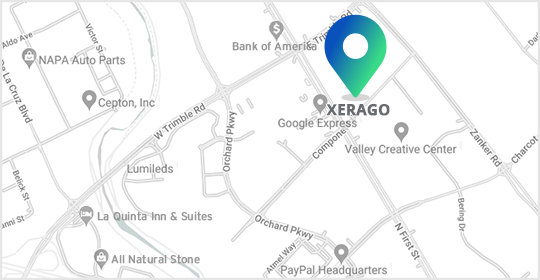
2570 N. First Street, Suite 200,
San Jose, CA 95131
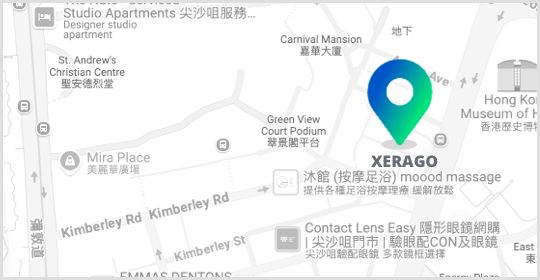
Office No. 26, 10/F, Beverley Commercial Centre,
87-105 Chatham Road South, Tsim Sha Tsui, Kowloon,
Hong Kong
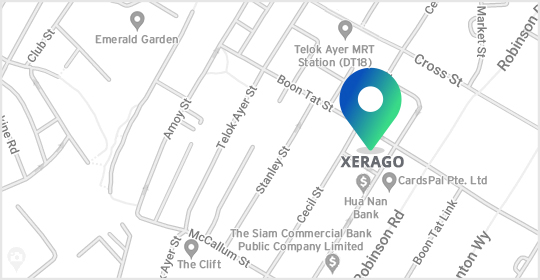
The Octagon Building, #11-07, 105, Cecil Street,
Singapore 069 534
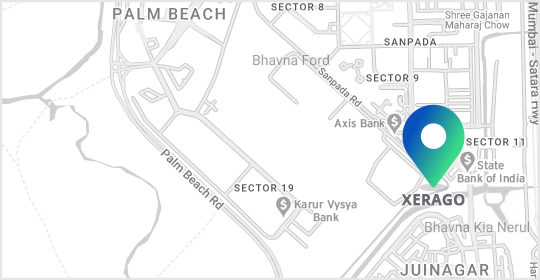
#901, 9th Floor , Ellora Fiesta.
Plot No - 8 , Sector - 11 , Sanpada.
Opp. Juinagar Rly Station.
Navi Mumbai – 400 705
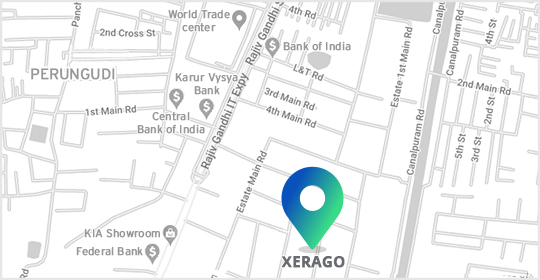
Xerago Towers, Plot 80 & 93,
Industrial Estate, Perungudi,
Chennai, Tamil Nadu - 600096




(Coming Soon)
2570 N. First Street, Suite 200,
San Jose, CA 95131
Office No. 26, 10/F, Beverley Commercial Centre,
87-105 Chatham Road South,
Tsim Sha Tsui, Kowloon,
Hong Kong
The Octagon Building, #11-07, 105, Cecil Street,
Singapore 069 534
#901, 9th Floor , Ellora Fiesta.
Plot No - 8 , Sector - 11 , Sanpada.
Opp. Juinagar Rly Station.
Navi Mumbai – 400 705
Xerago Towers, Plot 80 & 93,
Industrial Estate, Perungudi,
Chennai, Tamil Nadu - 600096
(Coming Soon)