




Ensuring Performance Optimization: Speed and Efficiency in Your Commerce Platform
Published: February 01, 2024 | Updated: July 09, 2024
Introduction
In the fast-paced digital landscape, the performance of a commerce platform plays a pivotal role in shaping the success of businesses. Whether it's an online store or a complex enterprise-level e-commerce solution, the need for a seamlessly performing platform cannot be overstated.
For mid-market companies aiming for growth, a well-optimized platform ensures that they can handle increased traffic, support growing product catalogs, and meet the evolving expectations of their customer base. On the enterprise level, where the scale is massive and the stakes are higher, a finely tuned commerce platform becomes the backbone of operations, facilitating seamless transactions, managing intricate workflows, and providing a foundation for digital innovation.
The key focus of this article is on addressing the challenges associated with slow and inefficient platforms for mid-market and enterprise-level companies and offering actionable insights and solutions for maximizing the performance of their commerce platforms.
Understanding Performance Optimization
Performance optimization in the context of commerce platforms refers to the systematic process of improving the speed, responsiveness, and overall efficiency of an online ecosystem. It involves a multifaceted approach encompassing various technical and strategic considerations.
The Impact of Performance on User Experience and Customer Satisfaction
The performance of a commerce platform has a profound impact on user experience, directly influencing customer satisfaction and, consequently, business success. Several key aspects highlight this impact:
- User Engagement: Swift loading times and responsive interfaces keep users engaged. A positive first impression encourages users to explore further, increasing the likelihood of conversions and customer retention.
- Conversion Rates: Studies consistently show that slower-loading websites experience higher bounce rates and lower conversion rates. Optimal performance contributes to a seamless transactional process, positively impacting conversion rates.
- Search Engine Rankings: Search engines consider page speed as a ranking factor. Well-optimized platforms are more likely to rank higher in search engine results, leading to increased visibility and organic traffic.
- Brand Perception: A slow and inefficient platform can negatively influence how users perceive a brand. A fast, reliable, and responsive platform, on the other hand, contributes to a positive brand image.
Strategies for Maximizing Performance

Running a Website Audit
Audits serve as a diagnostic tool, allowing businesses to identify performance bottlenecks and assess the efficacy of their digital presence. For mid-market and enterprise companies, where the stakes are high and user expectations are demanding, running regular website audits is a strategic imperative.
- Identifying Performance Bottlenecks: Regular audits pinpoint areas of the platform where performance bottlenecks may occur. These bottlenecks could manifest in slow-loading pages, sluggish server responses, or inefficient resource management. Identifying these bottlenecks is the first step in formulating targeted strategies for optimization. To identify these bottlenecks effectively utilize performance monitoring tools and conduct code reviews.
- Assessing User Journey and Interaction Points: Understanding the user journey is integral to crafting a seamless online experience. Website audits delve into how users navigate through the platform, interact with key features, and respond to various elements. This insight enables businesses to optimize specific touchpoints, enhancing overall user satisfaction. To assess user journeys leverage analytics platforms and implement user feedback mechanisms.
Key Performance Metrics to Monitor
- Loading Times: Loading times are a cornerstone of user experience. Audits meticulously measure how quickly pages, images, and content load across the platform. By assessing loading times, businesses can identify opportunities for optimization, ensuring that users encounter minimal delays during their online interactions.
- Server Response Times: The efficiency of server response times directly influences how quickly the platform can process and fulfill user requests. Audits analyze server response times to uncover potential lags or delays. Optimizing server responses contributes significantly to a more responsive and reliable platform.
- Mobile Responsiveness: With the increasing prevalence of mobile users, mobile responsiveness is a critical metric. Audits evaluate how well the platform adapts to different devices and screen sizes. Ensuring mobile responsiveness is not only vital for user satisfaction but also aligns with search engine algorithms that prioritize mobile-friendly content.
Leveraging Content Delivery Networks (CDNs)
Content Delivery Networks (CDNs) have emerged as an indispensable tool for businesses, especially mid-market and enterprise companies, seeking to maximize the speed and efficiency of their commerce platforms. Here are the primary ways it helps businesses:
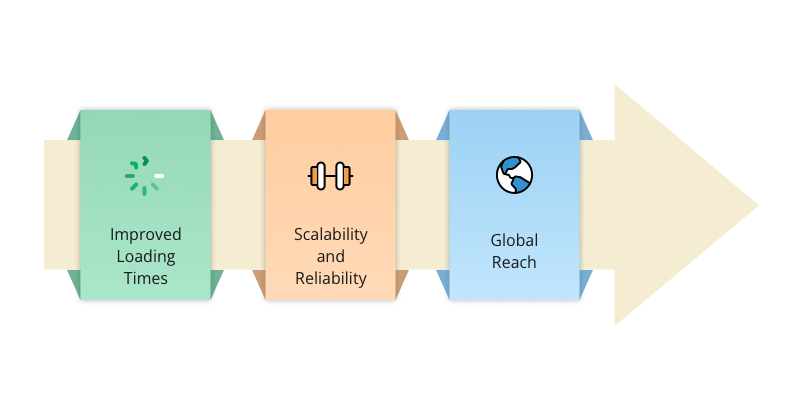
- Improved Loading Times: CDNs significantly enhance loading times by serving content from servers closest to users. This minimizes latency and accelerates the delivery of assets, contributing to a faster and more responsive user experience.
- Scalability and Reliability: For businesses operating on a larger scale, CDNs offer scalability by efficiently handling increased traffic and demand. Moreover, the distributed nature of CDNs enhances the reliability of content delivery, ensuring consistent performance even during traffic spikes.
- Global Reach: For enterprises with a global audience, CDNs provide a strategic advantage by ensuring a uniformly high-quality experience for users worldwide. The geographical distribution of servers accommodates diverse user locations, fostering a seamless experience for international customers.
Implementation Best Practices
- Assessing Network Reach: Select a CDN provider with an extensive global network reach. The broader the network, the better the coverage, especially for businesses catering to a geographically diverse audience.
- Performance and Reliability: Evaluate the performance and reliability track record of CDN providers. Look for providers with a history of consistent uptime, minimal downtime, and fast content delivery.
- Customizing Caching Policies: Tailor caching policies to the specific needs of the platform. Define which content should be cached and for how long, considering factors such as content volatility and update frequency.
- Implementing Load Balancing: Utilize load balancing features offered by CDNs to distribute incoming traffic across multiple servers. This ensures optimal resource utilization and prevents any single server from becoming a bottleneck.
By understanding how CDNs function and implementing best practices in provider selection and configuration, businesses can leverage the full potential of these networks to elevate the performance of their commerce platforms.
In a landscape where speed is currency, ensuring optimal performance is the unwavering commitment to delivering seamless experiences, unlocking growth, and dominating the competitive forefront of the digital marketplace.
Transitioning from Page Load to Single Page Application (SPA)
Here we delve into the benefits of transitioning from page load to single-page application (SPA), how it helps optimise performance, and the considerations for mid-market and enterprise adoption.
- Reduced Loading Times: SPAs load once, and subsequent interactions do not require full page reloads. This significantly reduces loading times as users navigate through the application, contributing to a smoother and more responsive experience.
- Enhanced User Experience: The elimination of page reloads results in a more fluid and engaging user experience. SPAs provide a seamless transition between different sections of the application, creating a sense of continuity for users.
- Optimized Resource Utilization: SPAs often load only the necessary resources for a particular view, optimizing resource utilization. This leads to more efficient use of bandwidth and faster rendering of content.
Considerations for Mid-Market and Enterprise Adoption:
- Scalability Requirements: Before adopting SPAs, businesses should assess their scalability requirements. While SPAs offer efficiency, they should align with the scalability needs of mid-market and enterprise-level platforms, handling large volumes of concurrent users.
- Development Team Expertise: Transitioning to SPAs may require expertise in modern JavaScript frameworks. Businesses should ensure that their development teams are well-versed in the selected frameworks or consider upskilling efforts to support the transition effectively.
- Compatibility with Existing Systems: For enterprises with complex existing systems, compatibility is key. Ensure that SPAs seamlessly integrate with existing infrastructure, databases, and APIs to maintain a cohesive and interconnected digital ecosystem.
Caching Mechanisms for Improved Efficiency
Efficiency lies at the heart of a high-performing commerce platform, and one of the key strategies to achieve this is through the implementation of robust caching mechanisms.
Here are the benefits of browser-caching and server-side caching:
- Faster Page Load Times: By reusing locally stored assets, subsequent page loads are significantly faster.
- Bandwidth Savings: Reduces the need to repeatedly download static resources, saving bandwidth for both the user and the server.
- Improved Server Response Times: Caching dynamic content reduces the need for extensive server processing, leading to faster response times.
- Scalability: Enhances the scalability of the platform by minimizing the load on the server, allowing it to handle more concurrent users.
Dynamic Content Caching Strategies:
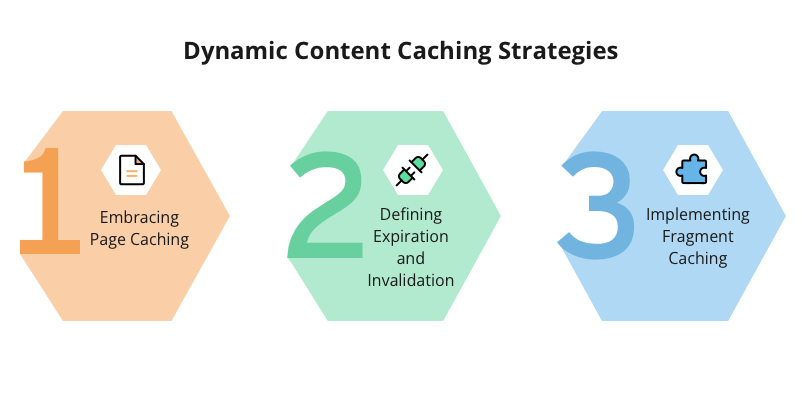
- Fragment Caching: Implement fragment caching for sections of dynamic content that don't change frequently. By caching only specific fragments, you can balance dynamic content with efficient caching.
- Page Caching: Cache entire pages for content that doesn't require frequent updates. Page caching is particularly effective for static or semi-static content, such as product descriptions or informational pages.
- Expiration and Invalidation: Define expiration times for cached content to ensure that users receive up-to-date information. Additionally, implement mechanisms for cache invalidation when dynamic content is updated to maintain accuracy.
By leveraging browser caching for static assets and employing server-side caching strategies for dynamic content, businesses can strike a balance between delivering fast, responsive experiences and ensuring the accuracy of real-time information on their platforms.
Continuous Monitoring and Optimization
Sustaining peak performance in commerce platforms is an ongoing effort, demanding continuous monitoring and agile optimization strategies.
Real-time Performance Monitoring
Utilizing Tools:
- Comprehensive Solutions: Employ monitoring tools for real-time insights into loading times, server responses, and user interactions.
- User Experience Monitoring: Use tools that track user interactions, providing insights from a user-centric perspective.
Alert Systems:
- Threshold Alerts: Set up alerts based on predefined thresholds for quick responses to potential issues.
- Error Monitoring: Implement systems to receive alerts for unexpected errors, ensuring a smooth user experience.
Agile Optimization Strategies
- Multivariate Testing: Conduct multivariate testing to optimize specific features based on user engagement and performance impact.
- Scalable Infrastructure: Proactively assess scalability to handle expected growth without compromising speed.
- Continuous Code Reviews: Regularly review code to identify and address potential performance bottlenecks.
- Performance Budgets: Establish and monitor performance budgets to maintain predefined metric thresholds.
To conclude,
In the relentless pursuit of success in the digital arena, mid-market and enterprise companies must recognize that performance optimisation is not just a checkbox—it's indispensable for sustained success. From meticulous website audits to the dynamic realm of single-page applications and the efficiency revolution brought by content delivery networks, each strategy is crucial for this journey.
As the future unfurls, remember this: prioritizing performance isn't a choice; it's the very essence of digital dominance. In a landscape where every second counts, those who continually refine and elevate their commerce platforms can only meet the demands of today and also pave the way for a successful future.



Global Office Locations

2570 N. First Street, Suite 200,
San Jose, CA 95131

Office No. 26, 10/F, Beverley Commercial Centre,
87-105 Chatham Road South, Tsim Sha Tsui, Kowloon,
Hong Kong

The Octagon Building, #11-07, 105, Cecil Street,
Singapore 069 534

#901, 9th Floor , Ellora Fiesta.
Plot No - 8 , Sector - 11 , Sanpada.
Opp. Juinagar Rly Station.
Navi Mumbai – 400 705

Xerago Towers, Plot 80 & 93,
Industrial Estate, Perungudi,
Chennai, Tamil Nadu - 600096





(Coming Soon)
2570 N. First Street, Suite 200,
San Jose, CA 95131
Office No. 26, 10/F, Beverley Commercial Centre,
87-105 Chatham Road South,
Tsim Sha Tsui, Kowloon,
Hong Kong
The Octagon Building, #11-07, 105, Cecil Street,
Singapore 069 534
#901, 9th Floor , Ellora Fiesta.
Plot No - 8 , Sector - 11 , Sanpada.
Opp. Juinagar Rly Station.
Navi Mumbai – 400 705
Xerago Towers, Plot 80 & 93,
Industrial Estate, Perungudi,
Chennai, Tamil Nadu - 600096
(Coming Soon)