




Embrace the Future of Commerce: The Need to Upgrade your Commerce Platform
Published: February 01, 2024 | Updated: July 09, 2024
Introduction
The world of online retail is on the cusp of a transformative revolution, where traditional shopping paradigms are rapidly giving way to a dynamic and interconnected digital marketplace.
With the ubiquitous presence of smartphones, consumers now carry a virtual marketplace in their pockets, demanding seamless and personalized experiences at their fingertips. Simultaneously, social commerce has emerged as a powerful force, blurring the lines between social media engagement and e-commerce transactions.
To thrive in this evolving landscape, businesses must recognize the imperative to upgrade their commerce capabilities. The conventional approaches that served well in the past are no longer sufficient to meet the demands of today's tech-savvy and discerning consumers.
The need for this upgrade is not merely a matter of staying competitive; it is all about survival and growth. Businesses that embrace these modern trends position themselves as pioneers and capitalize on the opportunities presented by the future of online retail.
In this article, we explore the key facets of this transformation, from understanding the impact of mobile and social commerce to unlocking the potential of personalized experiences and guiding businesses towards a future-ready commerce ecosystem.
The Rise of Mobile and Social Commerce
Mobile Commerce as a Dominant Force
"As mobile devices become extensions of ourselves, mobile commerce becomes an extension of the retail experience. It's not just convenience; it's the new frontier of customer interaction."
Mobile commerce has evolved from a convenience to a dominant force, fundamentally altering the landscape of online retail.
“According to Statista's Market Insights, global mobile e-commerce sales surged to $2.2 trillion in 2023, constituting a substantial 60 percent share of all e-commerce transactions across the globe. Looking ahead to 2027, Statista analysts project a further ascent, anticipating mobile e-commerce sales to reach an impressive $3.4 trillion”.
As mobile devices become the primary gateway to online shopping, the importance of mobile optimization cannot be overstated. Consumers demand seamless, user-friendly experiences on their smartphones, and businesses that fail to meet these expectations risk losing valuable customers.
Beyond user experience, mobile optimization directly impacts search engine rankings, with major search engines prioritizing mobile-friendly websites. This dual benefit underscores the critical role that mobile optimization plays in not only attracting and retaining customers but also in enhancing a business's online visibility.
Social Commerce Shaping Consumer Behavior
Social commerce, a symbiotic blend of social media engagement and e-commerce transactions, is reshaping the way consumers discover, explore, and purchase products.
From shoppable posts to integrated checkout features, platforms like Instagram, Facebook, and Pinterest are transforming into virtual marketplaces. This integration capitalizes on the social nature of online interactions, allowing users to discover and purchase products without leaving their preferred social platforms.
This convergence opens new avenues for customer acquisition and brand loyalty, as consumers can seamlessly transition from product discovery to purchase within the familiar environment of social media.
Besides, in the realm of social commerce, user-generated content (UGC) emerges as a powerful tool for driving sales. Consumers increasingly rely on peer recommendations and authentic experiences when making purchase decisions. Businesses that harness this community-driven approach can easily build trust, which is a crucial factor in the evolving landscape of online commerce.
"Today's businesses aren't just in the market; they're in the feed. Social commerce is the storefront where brands showcase products, and customers discover experiences that resonate beyond the buy button."
The Era of Personalization
The contemporary landscape of online retail is marked by a seismic shift towards personalization, where businesses strive to provide unique and tailored experiences for each individual consumer.
Importance of One-to-One Personalization
One-size-fits-all approaches are becoming obsolete in the era of online retail. Consumers, inundated with choices, now expect tailored experiences that resonate with their preferences and behaviors.
Businesses that prioritize one-to-one personalization can create a more engaging and satisfying user experience. This may include personalized product recommendations, dynamically adjusted website interfaces based on past behavior, and targeted communications that align with individual preferences. By recognizing and responding to each user's unique needs, businesses can foster stronger connections and increase customer loyalty.
AI-Powered Personalization
Artificial Intelligence (AI) plays a pivotal role in elevating personalization to new heights. Machine learning algorithms analyze vast datasets to identify patterns, trends, and correlations that may elude traditional analytical methods. This predictive analysis enables businesses to anticipate customer preferences, even before customers themselves may be aware of them.
Besides, AI-powered personalization extends beyond product recommendations to include dynamic pricing strategies and personalized promotions. Businesses can dynamically adjust prices based on factors such as demand, competitor pricing, and individual customer behaviors. This not only maximizes revenue but also provides customers with tailored pricing that reflects their perceived value.
The Imperative to Upgrade Commerce Capabilities
As the dynamics of online retail continue to evolve, the imperative for businesses to upgrade their commerce capabilities becomes increasingly evident. Embracing modern trends and technologies is not merely a choice but a necessity for organizations aiming to stay competitive and provide superior customer experiences.
Connected Commerce Capabilities

Seamless Integration across Multiple Channels
- Ensures a unified customer experience across diverse touchpoints, fostering continuity from online platforms to in-store and mobile interactions.
- Allows businesses to engage with customers wherever they prefer to shop, establishing a cohesive brand presence.
- Enhances personalization and engagement by providing a holistic view of customer interactions across various channels.
Breaking Down Silos for a Unified Customer Experience
- Addresses the challenges posed by disconnected systems and departments within an organization.
- Facilitates collaboration between essential units such as marketing, sales, and customer service, ensuring a cohesive and synchronized approach.
- Elevates customer satisfaction by delivering a seamless, coherent brand experience, reducing friction points in the customer journey.
Composable Commerce Capabilities
Modular Architecture for Flexible Customization
- Shifts from rigid monolithic systems to a modular structure, allowing businesses to choose and integrate specific components based on their unique needs.
- Enhances adaptability and agility, enabling businesses to respond promptly to evolving requirements without overhauling the entire system.
- Empowers businesses to create a tailored tech environment that aligns precisely with their operational objectives.
Adapting to Changing Business Needs with Ease
- Provides the flexibility to add, modify, or remove features without disrupting the entire system, ensuring seamless evolution.
- Accommodates scalability requirements, allowing businesses to expand and grow without facing the limitations of a static infrastructure.
- Streamlines development processes, fostering efficiency in implementing updates and changes in response to market dynamics.
MACH Architecture (Microservices, API-First, Cloud-Native, Headless)
Microservices for Agility and Scalability
- Breaks down complex systems into smaller, independent services, promoting agility in development and deployment.
- Enhances scalability by allowing individual components to evolve independently, preventing bottlenecks in growth.
- Facilitates easier maintenance and updates, minimizing disruptions and downtime.
API-First Approach for Seamless Integrations
- Prioritizes the development of robust APIs, fostering smooth integration with other systems and third-party services.
- Enables businesses to connect seamlessly with external platforms, enhancing interoperability and collaboration.
- Strengthens the overall digital ecosystem, allowing for a more interconnected and streamlined operation.
Cloud-Native Infrastructure for Enhanced Performance
- Leverages the capabilities of cloud computing for improved scalability, flexibility, and cost-effectiveness.
- Eliminates the need for extensive on-premise infrastructure, reducing operational costs and increasing resource efficiency.
- Enhances reliability and performance through cloud-based services, ensuring optimal functioning even during peak demands.
Headless Architecture for Front-End Flexibility
- Decouples the front-end presentation layer from the back-end, allowing independent development and innovation.
- Enables businesses to create unique and customized user interfaces, fostering a distinct brand identity.
- Facilitates experimentation and innovation in design, providing the freedom to adapt to changing design trends and customer preferences.
In summary, upgrading commerce capabilities with a comprehensive focus on connected commerce, composable commerce, and MACH architecture positions businesses to navigate the complexities of the modern online retail landscape with agility and innovation. These advancements not only enhance customer experiences but also lay the foundation for sustained growth and success in a rapidly evolving digital marketplace.
The Future Roadmap for Online Retail
As online retail continues to evolve, businesses must chart a course that embraces change, leverages emerging technologies, and anticipates the shifting landscape of consumer behavior. The future roadmap for online retail involves a strategic approach to navigate the challenges and opportunities that lie ahead.
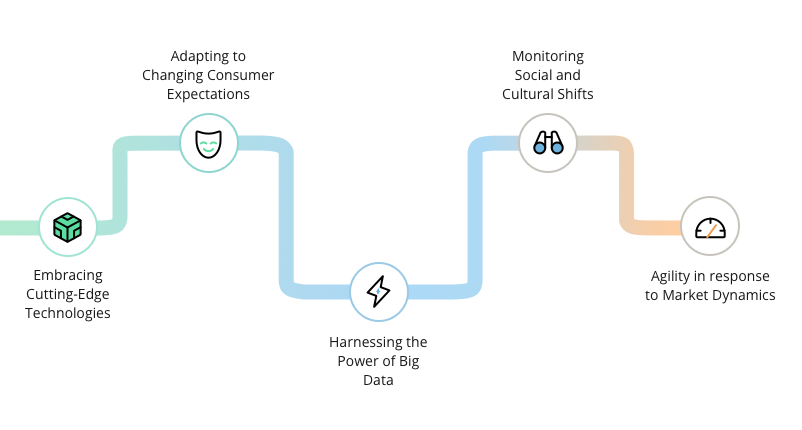
Embracing Cutting-Edge Technologies:
- Staying informed about emerging technologies such as augmented reality, virtual reality, and blockchain in the context of e-commerce.
- Exploring how these technologies can be leveraged to enhance product visualization, secure transactions, and improve overall customer engagement.
Adapting to Changing Consumer Expectations:
- Understanding that consumer expectations are dynamic and influenced by technological advancements.
- Being prepared to integrate new features and functionalities that align with evolving consumer preferences.
Harnessing the Power of Big Data:
- Leveraging big data analytics to gain comprehensive insights into customer behavior, preferences, and trends.
- Utilizing predictive analytics to foresee market shifts, enabling businesses to proactively adjust strategies.
- Implementing AI-driven analytics to refine personalization strategies, ensuring relevance and resonance with individual customers.
Monitoring Social and Cultural Shifts:
- Staying attuned to broader social and cultural shifts that may influence consumer preferences.
- Evaluating how societal changes, such as sustainability concerns or lifestyle shifts, may impact purchasing decisions.
Agility in Response to Market Dynamics:
- Building an agile business model that can quickly respond to changes in market dynamics.
- Proactively seeking feedback from customers and monitoring industry trends to identify emerging patterns.
To put it short, the future roadmap for online retail involves a commitment to adaptability, data-driven decision-making, and a keen understanding of emerging technologies and consumer trends.
Conclusion
Modern commerce goes beyond transactions; it's a holistic approach that integrates seamless customer experiences, personalized engagements, and innovative technologies.
In the relentless pursuit of excellence in online retail, it is critical for businesses to reimagine their approach to commerce to stay relevant and competitive. Upgrading commerce capabilities isn't a luxury but an essential investment in unlocking a realm of possibilities that align with the ever-changing preferences and demands of modern consumers.
The journey towards upgraded commerce capabilities is more than a technological leap; it is a strategic move that ensures sustained relevance, resilience, and success in the dynamic and ever-evolving world of digital commerce. By positioning themselves at the forefront of these advancements, businesses can shape the future landscape of online retail and distinguish themselves as pioneers in their respective industries.



Global Office Locations

2570 N. First Street, Suite 200,
San Jose, CA 95131

Office No. 26, 10/F, Beverley Commercial Centre,
87-105 Chatham Road South, Tsim Sha Tsui, Kowloon,
Hong Kong

The Octagon Building, #11-07, 105, Cecil Street,
Singapore 069 534

#901, 9th Floor , Ellora Fiesta.
Plot No - 8 , Sector - 11 , Sanpada.
Opp. Juinagar Rly Station.
Navi Mumbai – 400 705

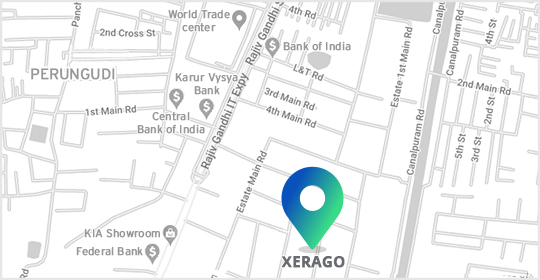
Xerago Towers, Plot 80 & 93,
Industrial Estate, Perungudi,
Chennai, Tamil Nadu - 600096


(Coming Soon)
2570 N. First Street, Suite 200,
San Jose, CA 95131
Office No. 26, 10/F, Beverley Commercial Centre,
87-105 Chatham Road South,
Tsim Sha Tsui, Kowloon,
Hong Kong
The Octagon Building, #11-07, 105, Cecil Street,
Singapore 069 534
#901, 9th Floor , Ellora Fiesta.
Plot No - 8 , Sector - 11 , Sanpada.
Opp. Juinagar Rly Station.
Navi Mumbai – 400 705
Xerago Towers, Plot 80 & 93,
Industrial Estate, Perungudi,
Chennai, Tamil Nadu - 600096
(Coming Soon)