



Implementing an Effective Data Layer for Advanced Tagging and Tracking Capabilities
Published: November 09, 2023 | Updated: August 16, 2024
Introduction
In today's data-driven digital landscape, businesses are constantly seeking ways to enhance their digital tracking capabilities and gather valuable insights. One powerful tool that often remains underutilized but can revolutionize your data strategy is the data layer. While at the outset it might sound like a complex concept, the long-term advantages it offers are well worth the investment.
A data layer essentially serves as a structured data repository that holds information relevant to your website or application. It acts as an intermediary, facilitating the seamless exchange of data between your site and various applications, such as a tag management system. This means that nearly every user interaction on your website, app, or portal can be captured and passed through the data layer, subsequently translated into variables and dimensions in your analytics tools.
We believe that implementing a data layer is a strategic move that can empower enterprises to collect, manage, and utilize data more effectively. It improves tracking capabilities, enhances data quality, and provides a foundation for data-driven decision-making and personalized user experiences.
In this article, we explore the importance of a data layer in tagging, its critical components, and how it supercharges data capturing, enhances the quality of insights, and provides actionable reports that drive business growth.
The Crucial Role of Data Layer in Tagging and Tracking
Before delving into the intricacies of a data layer, let's first understand why it holds a pivotal position in the world of tagging. In the realm of digital analytics and tracking, tags are the instruments that gather essential data about user interactions, events, and behaviors on websites and applications. These tags are like digital breadcrumbs, capturing every click, form submission, or video view.
However, to work seamlessly and effectively, tags need a structured, organized environment to operate in – this is where the data layer comes into play. The data layer lies in the middle of the application and experience layer. It transfers visitor interaction data occurring at the experience layer of your website or mobile app to various applications such as analytics, tag management system, personalization, live chat, etc. that support the functionality of your site.
The Anatomy of a Data Layer
A data layer is a standardized structure embedded within the source code of a website or app. It acts as a bridge between the digital property and various analytics and tracking tools.
The specific contents of a data layer can vary depending on the needs of the business, but it commonly includes the following types of data mapped in the form of variables, data elements and triggers:
- Page Information: Details about the page or screen being viewed, such as its title, URL, or category. This information helps in identifying where user interactions are occurring.
- User Information: Information about the user, including unique identifiers, login status, and user preferences. This data supports the creation of user profiles and personalized experiences.
- Event Data: Records of user actions and interactions with the website or app, such as clicks, form submissions, downloads, video views, and more. Each event typically includes relevant details like event type, timestamp, and associated parameters.
- E-commerce Data: For online retailers, data layers often include information related to e-commerce transactions, such as product details, cart contents, purchase values, and order IDs.
- Custom Variables: Businesses can define custom variables or parameters within the data layer to capture specific data points relevant to their industry or objectives. These variables can be tailored to unique tracking requirements.
- User Journey Data: Data layers can store information about the user's journey across multiple visits or interactions, allowing for the creation of a comprehensive 360-degree view of the customer.
- Performance Metrics: Information related to website or app performance, including load times, errors, and other metrics that help identify areas for improvement.
- Consent and Privacy Data: In compliance with data privacy regulations, the data layer may also contain details related to user consent for data collection and processing.
Utilizing the data layer for variables and triggers stands out as a robust approach and is strongly recommended over relying on click elements such as classes and IDs. In the event of a future website redesign or restructuring those results in alterations or elimination of the classes employed as trigger criteria, your tracking will lose its effectiveness. Consequently, the events will not be relayed to the analytics system, and the trigger criteria will no longer be met.
Unlike click elements, data layers mostly employ an API to retrieve data, ensuring the data's integrity and thereby establishing it as a resilient method for data collection.
Beyond the Basics: Exploring the Many Facets of Data Layers
While the primary purpose of data layer is to facilitate the collection of data, we believe its capabilities extend far beyond this fundamental role.
Access to Consistent and Up-to-Date Information
Implementing an effective data layer significantly enhances data capturing capabilities. It achieves this by centralizing data into a structured repository, enforcing standardized data formats, providing real-time data availability, and enhancing data accuracy. This streamlined data capture process ensures that businesses have access to consistent and up-to-date information.
Elevating the Quality of Insights
An effective data layer is crucial for improving the quality of insights derived from analytics. It enables context-rich data by storing content-related information, allowing for a deeper understanding of user behavior. Additionally, user-centric insights are made possible through the creation of comprehensive user profiles, resulting in a holistic view of customer journeys. Custom metrics can also be defined within the data layer, offering tailored insights unique to specific business needs.
Actionable Reports for Informed Decisions
The ultimate aim of data-driven decision-making is to translate insights into actionable strategies. A well-implemented data layer supports this goal by providing real-time reporting capabilities, enabling personalized recommendations, facilitating performance optimization, and empowering data-backed strategies. This foundation of actionable reports ensures that businesses can make timely and informed decisions based on solid data.
Why Invest in a Data Layer?
The primary goal of implementing a data layer is to simplify the implementation of custom tracking. It offers easy access to data that can be used to enhance the user experience on your site, app, or product. Additionally, a data layer is ideal for collecting data in post-login windows, providing insights into both users and accounts for personalized campaigns.
Here are some compelling reasons to invest in a data layer:
- Simplified Analytics: Data layers streamline the implementation of custom tracking, making it more efficient and accurate.
- Data Accessibility: Information stored in a data layer is readily accessible for reporting and marketing purposes.
- Eliminates DOM Scraping: A data layer eliminates the need for DOM scraping, which simplifies data collection.
- Reliable Architecture: It provides a reliable architecture for deploying triggers for different types of tags and enables easier communication between your website/application and other tools like tag managers and analytics platforms.
- Simpler Debugging: Debugging becomes more straightforward with the structured data provided by a data layer.
- Testing Flexibility: You can test changes or new features more easily, ensuring they function as intended.
Final Thoughts
In the age of data, organizations that recognize the significance of a robust data layer are positioned for success. It's not just about collecting data; it's about collecting the right data in the right way. At Xerago, we understand that the data layer is the unsung hero in the world of tagging and tracking. It's the foundation upon which businesses can build their data-driven futures.
As enterprises strive to extract actionable insights from the vast sea of digital interactions, an effective data layer is their secret weapon. It empowers them to capture data efficiently, elevate the quality of insights, and generate actionable reports that drive growth, innovation, and digital impact. In a world where data reigns supreme, the data layer is the key to unlocking its true potential.



Global Office Locations

2570 N. First Street, Suite 200,
San Jose, CA 95131

Office No. 26, 10/F, Beverley Commercial Centre,
87-105 Chatham Road South, Tsim Sha Tsui, Kowloon,
Hong Kong

The Octagon Building, #11-07, 105, Cecil Street,
Singapore 069 534

#901, 9th Floor , Ellora Fiesta.
Plot No - 8 , Sector - 11 , Sanpada.
Opp. Juinagar Rly Station.
Navi Mumbai – 400 705

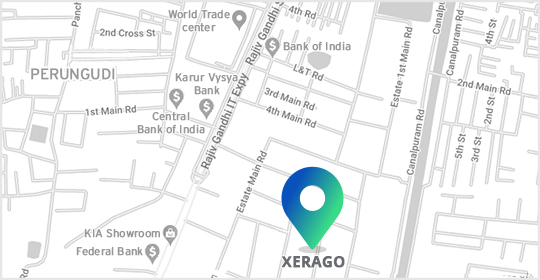
Xerago Towers, Plot 80 & 93,
Industrial Estate, Perungudi,
Chennai, Tamil Nadu - 600096




(Coming Soon)
2570 N. First Street, Suite 200,
San Jose, CA 95131
Office No. 26, 10/F, Beverley Commercial Centre,
87-105 Chatham Road South,
Tsim Sha Tsui, Kowloon,
Hong Kong
The Octagon Building, #11-07, 105, Cecil Street,
Singapore 069 534
#901, 9th Floor , Ellora Fiesta.
Plot No - 8 , Sector - 11 , Sanpada.
Opp. Juinagar Rly Station.
Navi Mumbai – 400 705
Xerago Towers, Plot 80 & 93,
Industrial Estate, Perungudi,
Chennai, Tamil Nadu - 600096
(Coming Soon)