




Revolutionizing Omnichannel Experiences with a 360-Degree View of Customer Journey
Published: November 21, 2023 | Updated: October 18, 2024
Introduction
In a landscape marked by ever-changing customer expectations, staying ahead of the curve is essential for businesses striving not just to meet but surpass these evolving demands. One powerful way to achieve this is by harnessing the potential of customer journey analytics. This transformative tool allows organizations to unravel the intricate web of customer interactions and touchpoints with a brand, providing invaluable insights.
The culmination of customer journey analytics results in a refined and comprehensive 360-degree perspective of the customer experience. The 360-degree customer view, in turn, can be leveraged for refining strategies, elevating customer engagement, and ultimately boosting digital impact.
This article aims to unveil the intricacies of customer journey analytics, offering a systematic approach to navigate and master its complexities. So, get ready to enhance your understanding and fine-tune your strategies, ensuring that each customer interaction is meticulously optimized for success.
Defining Customer Journey Analytics
Customer journey analytics provides a holistic lens for examining the sequence of interactions between a customer and a brand across various channels and over an extended period. Instead of isolating individual touchpoints, this analytical approach considers the entire journey, enabling businesses to identify patterns, pinpoint potential challenges, and acknowledge moments of satisfaction. In essence, customer journey analytics goes beyond surface-level observations. It dives deep to tap into data from disparate sources – both offline and online.
Customer Journey Analytics vs. Customer Journey Mapping
Customer Journey Analytics revolves around unlocking the potential of data to gain profound insights into the end-to-end customer journey. The process is inherently data-centric, involving the collection, processing, and analysis of customer data derived from diverse sources such as online and offline touchpoints, social media, transactions, and more. The primary goal is to derive meaningful and quantitative insights into customer behavior, preferences, and pain points. Notably, Customer Journey Analytics offers real-time visibility into customer interactions, allowing businesses to respond promptly to changing customer behaviors and preferences, adding a dynamic and responsive dimension to understanding the customer journey.
On the flip side, Customer Journey Mapping is a visual representation of the customer's interactions with a brand, focusing on creating a detailed, step-by-step illustration of the customer's experience across various touchpoints. This qualitative tool is more about storytelling and empathy, requiring teams to put themselves in the customer's shoes, understand their emotions, motivations, and pain points at each touchpoint. The tool relies on a creative, human-centered approach to capture the emotional and experiential aspects of the customer journey.
Redefining Omnichannel Experiences through Customer Journey Analytics
Achieving true omnichannel excellence requires more than mere presence across various platforms—it demands a deep understanding of customer interactions across these channels. Customer Journey Analytics emerges as a transformative force, reshaping the landscape of omnichannel engagement.
Unified Visibility across Channels: Breaking Silos
One of the fundamental challenges in achieving seamless omnichannel experiences lies in breaking down data silos. Traditionally, customer interactions on different channels were treated in isolation, resulting in fragmented insights. Customer Journey Analytics, however, breaks through these silos by providing unified visibility across channels. This unified view is instrumental in identifying patterns, understanding cross-channel influences, and ensuring consistency in messaging and experiences.
Real-time Adaptability: Meeting Customers in the Now
Omnichannel experiences are not static; they evolve in real time with customer behaviors and market dynamics. Customer Journey Analytics injects a real-time dimension into omnichannel strategies. By continuously monitoring and analyzing customer interactions as they happen, businesses gain the agility to adapt and optimize their omnichannel approach on the fly. This adaptability is crucial in addressing changing customer preferences, market trends, and unexpected challenges, ensuring that each touchpoint contributes seamlessly to the overall customer journey.
Personalization Precision: Tailoring Experiences at Scale
Omnichannel personalization is a cornerstone of enhanced customer experiences. However, achieving personalization at scale requires a nuanced understanding of individual customer journeys. Customer Journey Analytics empowers businesses with the ability to precisely tailor omnichannel experiences based on real-time insights. By identifying preferences, pain points, and preferred channels, businesses can deliver personalized interactions across touchpoints. This not only enhances customer satisfaction but also strengthens brand loyalty by demonstrating a keen understanding of individual needs.
Journey Optimization: Continuous Enhancement
Omnichannel is not a one-time project; it's an ongoing journey of refinement. Customer Journey Analytics introduces a continuous optimization loop to omnichannel strategies. Through iterative analysis and insights derived from customer interactions, businesses can identify areas for improvement, experiment with different approaches, and enhance the overall omnichannel journey over time. This iterative optimization ensures that businesses stay ahead of the curve in delivering experiences that align with evolving customer expectations.
Navigating Challenges in Customer Journey Analytics: Solutions for a Seamless Journey
While Customer Journey Analytics holds immense potential for businesses, implementing it successfully comes with its set of challenges. Understanding and addressing these challenges is pivotal to unlocking the full benefits of a 360-degree view of the customer journey.
1. Data Fragmentation and Silos: Creating a Unified Data Ecosystem
Challenge: One of the primary hurdles is dealing with data fragmentation and silos. Customer interactions occur across a myriad of channels, each generating valuable data. When this data is trapped in silos, it impedes the creation of a unified customer view.
Solution: Implementing a robust data integration strategy is crucial. Businesses need to break down silos by unifying data from various sources into a centralized repository. Technologies like Data Fabric, which create interconnected data ecosystems, prove instrumental in overcoming this challenge. By fostering seamless data flow, organizations can ensure a holistic understanding of the customer journey.
2. Real-time Data Integration: Adapting at the Speed of Customer Interactions
Challenge: Customer interactions happen in real time, and delays in data integration can lead to outdated insights. Real-time data integration is crucial for staying attuned to the dynamic nature of customer journeys.
Solution: Embrace technologies and platforms that support real-time data integration. This ensures that customer profiles are continuously updated, providing businesses with the most current and relevant insights. Cloud-based solutions and data streaming technologies play a pivotal role in enabling real-time integration, facilitating instantaneous adaptability to evolving customer behaviors.
3. Balancing Privacy and Personalization: The Tightrope Walk
Challenge: Achieving personalization without compromising customer privacy is a delicate balancing act. Striking the right chord between providing tailored experiences and respecting privacy regulations poses a challenge.
Solution: Prioritize privacy by implementing transparent consent mechanisms and robust security measures. Anonymizing and aggregating data for analysis help derive meaningful insights without compromising individual privacy. By adhering to data protection regulations and communicating privacy measures transparently, businesses can build trust and ensure ethical use of customer data.
4. Data Quality and Accuracy: Polishing the Customer Lens
Challenge: Inaccurate or incomplete data hampers the creation of a reliable 360-degree customer view. Data quality issues, such as duplicates or outdated information, can lead to misguided insights.
Solution: Regularly clean and validate data through automated processes. Utilize data cleansing tools to eliminate duplicates, standardize formats, and validate information. Instituting data governance practices ensures that data remains accurate over time, enhancing the reliability of customer insights.
5. Scalability: Growing with the Customer Base
Challenge: As businesses expand, the volume of customer data grows exponentially. Traditional systems may struggle to handle this increased data load, affecting performance.
Solution: Opt for scalable data integration solutions that can evolve with the business. Cloud-based and scalable infrastructure allow organizations to accommodate increasing data loads without sacrificing performance. This ensures that the customer journey analytics framework remains agile and effective even as the business scales.
Optimizing Customer Journey Analytics: Unleashing the Full Potential
While implementing customer journey analytics provides businesses with a powerful tool for understanding and enhancing customer experiences, the true value lies in optimizing its use. Here's how organizations can unlock the full potential of customer journey analytics through strategic optimization.
1. AI and Machine Learning Integration: The Power of Prediction
AI Integration: Incorporate artificial intelligence (AI) into customer journey analytics to enhance predictive capabilities. AI algorithms can identify patterns, predict future behaviors, and recommend personalized actions.
Machine Learning: Leverage machine learning models to refine customer segmentation, enabling more precise targeting. As customer data grows, machine learning becomes increasingly adept at uncovering nuanced patterns and predicting outcomes.
2. Feedback Loops: Closing the Knowledge Gap
Customer Feedback: Actively seek and incorporate customer feedback into the analytics process. Customer opinions and sentiments provide valuable qualitative insights that complement quantitative data.
Iterative Improvement: Establish feedback loops to iterate and improve analytics models. A continuous feedback mechanism ensures that the analytics approach aligns with customer expectations and business goals.
3. Personalization Refinement: Tailoring Experiences
Granular Personalization: Use customer journey analytics to dig deeper into personalization. Identify specific touchpoints where personalization can be more granular and meaningful.
Dynamic Personalization: Implement dynamic personalization strategies that adapt in real time. For instance, adjust website content, offers, or recommendations based on the latest customer interactions.
4. Visualization and Reporting Enhancement: Clarity in Insights
Interactive Dashboards: Invest in user-friendly, interactive dashboards for visualizing customer journey data. Ensure that these dashboards are accessible to relevant teams, facilitating easy interpretation.
Custom Reports: Tailor reports to the specific needs of different departments. Customized reports help each team extract the most relevant insights for their functions.
5. Experimentation and A/B Testing: Data-Driven Iteration
Test Hypotheses: Formulate hypotheses about customer behaviors and test them through A/B testing. Use controlled experiments to validate assumptions and refine strategies.
Iterative Learning: View experimentation as a continuous learning process. Analyze the results of A/B tests to iteratively improve and optimize customer journey analytics models.
6. Benchmarking Against Industry Standards: Staying Competitive
Industry Comparison: Benchmark your customer journey analytics against industry standards. Understand how your performance compares to competitors and identify areas for improvement.
Competitive Insights: Analyze the customer journey analytics practices of industry leaders. Extract insights that can be adapted to enhance your strategies and stay competitive in the market.
By adopting these optimization strategies, businesses can elevate customer journey analytics from a valuable tool to a dynamic engine that propels the organization toward a deeper understanding of its customers. The optimization process transforms analytics from a passive observer to an active partner in crafting exceptional customer experiences.
Conclusion
In conclusion, the journey towards revolutionizing omnichannel experiences with a 360-degree view of the customer is not just a pursuit of data—it's a commitment to understanding, adapting, and exceeding the expectations of each unique customer. It's a dynamic partnership between technology and empathy, analytics and creativity, data, and intuition. As businesses embark on this transformative journey, the destination is not just enhanced customer experiences; it's the creation of lasting connections, unwavering loyalty, and a reputation that stands the test of time.



Global Office Locations

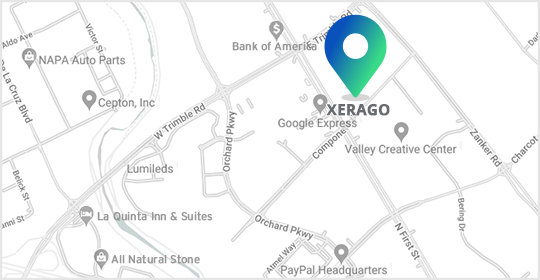
2570 N. First Street, Suite 200,
San Jose, CA 95131
Office No. 26, 10/F, Beverley Commercial Centre,
87-105 Chatham Road South, Tsim Sha Tsui, Kowloon,
Hong Kong

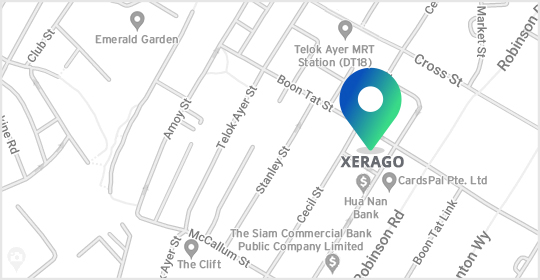
The Octagon Building, #11-07, 105, Cecil Street,
Singapore 069 534
#901, 9th Floor , Ellora Fiesta.
Plot No - 8 , Sector - 11 , Sanpada.
Opp. Juinagar Rly Station.
Navi Mumbai – 400 705

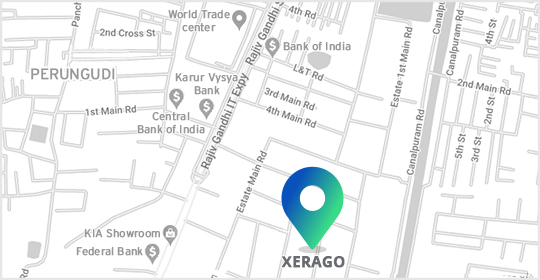
Xerago Towers, Plot 80 & 93,
Industrial Estate, Perungudi,
Chennai, Tamil Nadu - 600096



(Coming Soon)
2570 N. First Street, Suite 200,
San Jose, CA 95131
Office No. 26, 10/F, Beverley Commercial Centre,
87-105 Chatham Road South,
Tsim Sha Tsui, Kowloon,
Hong Kong
The Octagon Building, #11-07, 105, Cecil Street,
Singapore 069 534
#901, 9th Floor , Ellora Fiesta.
Plot No - 8 , Sector - 11 , Sanpada.
Opp. Juinagar Rly Station.
Navi Mumbai – 400 705
Xerago Towers, Plot 80 & 93,
Industrial Estate, Perungudi,
Chennai, Tamil Nadu - 600096
(Coming Soon)