




Composable Architecture to Future-Proof Your MarTech: Stay Agile Amid Technological Change
Published: February 01, 2024 | Updated: January 29, 2025
“… there is a world market for maybe five computers.” - IBM Chairman Thomas Watson in 1943
“Remote shopping, while entirely feasible, will flop.” — Time Magazine in 1966
Predicting change is easy. The hard part is getting it right.
The point we are making is that technological change is inevitable. And it's hard, and often impossible, to predict the way it would go.
MarTech is no exception. Marketing technology transformed rapidly to keep pace with the demands of data-driven decisions that personalize and sell to changing customer profiles and preferences, in a globally connected market.
The Dark Side of Upgrading MarTech
Organizations continually evaluate their Marketing Technology (MarTech) infrastructure for obsolescence and upgradation. And always have mixed feelings about upgrading MarTech when it comes to it. Upgrading MarTech can have huge operational and financial implications that influence how companies engage with their target audience and manage resources efficiently.
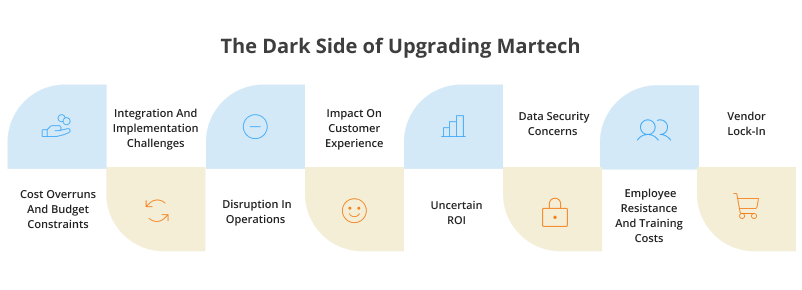
Cost Overruns and Budget Constraints
Unless compelling reasons are proffered by the CMO and CTO, businesses tend to not have the budgets for frequent MarTech upgrades that typically come at a substantial initial cost. Not to mention periodic licensing fees, implementation expenses, and ongoing maintenance charges.
Also, it's foreseeable that unforeseen expenses will arise during the upgrade process, leading to budget overruns.
Disruption in Operations
Implementing MarTech upgrades can disrupt regular business operations, causing downtime and productivity losses. Only the most astute of MarTech implementers, like Xerago, can guarantee minimal downtime.
There is also the cost of inefficiencies that come with learning new technologies, temporary as they may well be, as teams adapt to the changes.
Integration and Implementation Challenges
Even if there is sufficient due diligence to select replacement platforms that can integrate well with existing systems, in reality, upgrading MarTech will have compatibility issues. This implies additional investment in integrating and implementing solutions.
Off-the-shelf MarTech solutions may not fully align with the unique needs and processes of an organization. Consequently, inadequate implementation or customization can hinder the efficiency gains initially anticipated.
So, the anticipated benefits of MarTech upgrades are often delayed, hindering the organization’s capability to promptly capitalize on the upgraded technology.
Often ignored are the incompatibility costs of data silos hindering seamless communication between different departments, and impacting overall operational efficiency.
Employee Resistance and Training Costs
Everyone hates change. Adapting to new MarTech platforms may face resistance from employees, dropping morale and even leading to talent attrition.
The costs associated with training/retraining stakeholders on upgraded systems come at a cost, even if it's part of the implementation service.
Data Security Concerns
Upgrading MarTech may expose vulnerabilities in data security during the transition phase. Cybersecurity threats, potentially resulting in data breaches, could have severe financial and reputational consequences.
Uncertain ROI
While the proposal for upgrading MarTech is sure to include an estimate of returns on investment based on revised growth potentials, there is always the risk and uncertainty that returns may be delayed or not realized. At this point, businesses may question the very value of the proposition.
Vendor Lock-In
Vendors protect their interests by insisting on a lock-in period. Clients don’t mind offering it, since it gives them a one-point contact for all issues. Organizations often don’t consider the cost of vendor lock-in in terms of limited flexibility, unenthusiastic service standards, and inability to pursue more cost-effective alternatives. Or the costs and complexities of escaping vendor lock-in.
Impact on Customer Experience
All the above issues and impacts can be resolved with a fresh infusion of resources. What businesses will find onerous is to recover from customer attrition due to operational disruptions and glitches during the MarTech upgrade, which negatively impacts the customer experience and satisfaction.
Irrespective of all the above issues, upgrading or replacing MarTech to meet the exigencies of the market is often an unavoidable imperative. Is there a way to do this without facing the brunt of all these transitionary issues? Is there a way to future-proof the MarTech stack without falling prey to multiple vendor spiels racing you toward MarTech confusion?
Composable MarTech Architecture
Composable MarTech architecture is a strategic approach to organizing marketing technology by breaking down the stack into flexible and scalable modules. In essence, it's a way of constructing a marketing technology stack by assembling individual modules, plugins, and integrations, each of which can be upgraded or swapped out separately. Composable MarTech Architecture is changing the way businesses invest in technology and scale marketing with relative ease.
Contrary to traditional monolithic solutions, composable architecture mitigates the risks associated with dependence on a single, rigid system. By breaking down the MarTech stack into modular components, organizations gain greater control over each element, making it easier to manage, update, and replace specific parts without disrupting or overhauling the entire system.
Future-Proof MarTech Stacks
Future-proofing is a critical aspect of composable MarTech architecture. When rapid advancement in digital technologies quickly makes existing capabilities obsolete, the ability to adapt is invaluable. Composable architecture acts as a buffer against technological obsolescence, ensuring that the MarTech stack remains relevant and effective over the long term.
Modular Components
This architectural model comprises building blocks, each serving a specific function within the marketing technology ecosystem. These components include modular software, API-based integrations, and plugins. These components can be easily isolated, adjusted, and customized to meet specific business requirements, allowing for a highly adaptable and scalable marketing technology infrastructure.
Interoperability and Seamless Integration
New components of composable MarTech architecture can flawlessly integrate and interoperate with existing systems. This approach enables marketing teams to connect disparate system modules into a cohesive marketing technology ecosystem. This ensures that data and communication are not siloed, and flow smoothly between different tools.
Interoperability and Seamless Integration
New components of composable MarTech architecture can flawlessly integrate and interoperate with existing systems. This approach enables marketing teams to connect disparate system modules into a cohesive marketing technology ecosystem. This ensures that data and communication are not siloed, and flow smoothly between different tools.
Customization and Adaptability
Composable MarTech architecture stands out for its capacity to customize individual components to meet unique needs and objectives. This level of customization allows organizations to stay agile and responsive. They can adapt quickly to changing marketing demands and market trends, whether it's shifting consumer behaviors or emerging technologies, without being constrained by one-size-fits-all solutions.
Scalability and Resource Efficiency
Composable architecture allows organizations to scale individual components independently. This flexibility ensures that resources are used efficiently, as businesses can allocate resources based on the specific requirements of each modular component, rather than scaling the entire system.
Innovation and Experimentation
The modular nature of this architecture encourages innovation and experimentation by making it less risky. Marketing teams can easily experiment with new technologies and tools by integrating or replacing individual components incrementally, and judge the effects on the whole system without committing to large-scale change. This fosters a culture of continuous improvement and adaptation to emerging trends.
Enhanced Data Security and Compliance
Modular systems can be tailored to meet specific data security and compliance requirements. This is particularly crucial in an era where data privacy and regulatory compliance are critical for brand reputation. Composable MarTech architecture provides the flexibility to adapt to evolving data protection standards and ensure robust security measures.
Current Challenges of Composable MarTech
The notion of composability, although promising, presents certain challenges that need careful consideration. These include the need for skilled personnel, integration complexities, and getting modular components to work together. Acknowledging and addressing these challenges proactively is crucial for a successful implementation.
Transition Challenges: Shifting from a monolithic to a composable architecture may demand substantial initial investment of time, resources, and capital. This transition adds another layer of complexity, requiring careful planning and strategic considerations.
Complexity and Learning Curve: Managing the intricacies of composable architectures can be formidable, necessitating a nuanced understanding of each component and their interactions. Non-technical users face a stiff learning curve to manage the complexity of assembling composable elements to achieve desired outcomes.
Data Errors: The composability approach, especially with the manipulation of data from multiple sources, carries the inherent risk of errors. Despite the implementation of safeguards, the possibility remains of mistakes with substantial repercussions.
Opaque APIs: The future trajectory of composability heavily relies on Application Programming Interfaces (APIs). However, not all applications expose their functionalities through APIs, and those that do might not provide all the necessary functions for seamless composability.
Nascent AI Integration: While the integration of generative AI into composability is an intriguing prospect, it is at a far more nascent stage than with monolithic systems. The efficacy of AI in comprehending technical intricacies and translating natural language requests into cohesive workflows and datasets is yet to be fully realized with composable systems.
Concerns on Data Security and Privacy: Security becomes a significant concern as the number of components and interconnections increases, elevating the potential for failures or security breaches.
Composable architecture draws data from diverse sources and raises legitimate concerns about data security and privacy. This is particularly pertinent when dealing with sensitive customer data.
Conclusion:
In conclusion, composable MarTech architecture is gaining acceptance as a powerful and strategic solution for organizations aiming to build adaptable, scalable, and future-proof marketing technology stacks. Its emphasis on flexibility, customization, and seamless integration makes it a cornerstone for navigating the complexities of the modern digital landscape. Embracing this approach empowers businesses to both meet their current marketing technology needs and prepare proactively for the challenges and opportunities of the future.
Looking for MarTech Consulting? We help you streamline MarTech tools, maximize ROI, and uncover hidden redundancies.
Speak to a Martech Consultant


Global Office Locations

2570 N. First Street, Suite 200,
San Jose, CA 95131

Office No. 26, 10/F, Beverley Commercial Centre,
87-105 Chatham Road South, Tsim Sha Tsui, Kowloon,
Hong Kong
The Octagon Building, #11-07, 105, Cecil Street,
Singapore 069 534
#901, 9th Floor , Ellora Fiesta.
Plot No - 8 , Sector - 11 , Sanpada.
Opp. Juinagar Rly Station.
Navi Mumbai – 400 705
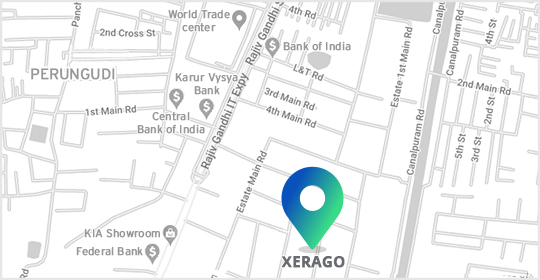
Xerago Towers, Plot 80 & 93,
Industrial Estate, Perungudi,
Chennai, Tamil Nadu - 600096



(Coming Soon)
2570 N. First Street, Suite 200,
San Jose, CA 95131
Office No. 26, 10/F, Beverley Commercial Centre,
87-105 Chatham Road South,
Tsim Sha Tsui, Kowloon,
Hong Kong
The Octagon Building, #11-07, 105, Cecil Street,
Singapore 069 534
#901, 9th Floor , Ellora Fiesta.
Plot No - 8 , Sector - 11 , Sanpada.
Opp. Juinagar Rly Station.
Navi Mumbai – 400 705
Xerago Towers, Plot 80 & 93,
Industrial Estate, Perungudi,
Chennai, Tamil Nadu - 600096
(Coming Soon)